How Deep to Fish for Crappie in Winter
That crisp Kansas winter air hitting your face as you head out to the lake can be exhilarating, but let's be real – finding crappie once the water turns truly cold can feel like searching for a needle in a haystack. They don't just disappear, but they sure do change their habits! This guide is all about demystifying winter crappie depth in Kansas, helping you understand where these tasty panfish hide when the temperatures plummet and how to coax them onto your hook.
The Winter Crappie Conundrum: Why Depth Matters So Much
When winter settles over Kansas, our lakes and reservoirs undergo a significant transformation. The once-bustling shallow waters empty out, and the crappie, like many other species, adapt by seeking comfort and sustenance elsewhere. This usually means a move to deeper water, but it's not always a straightforward "deeper is better" situation. Understanding the nuances of their cold-water behavior is key.
Understanding Crappie Metabolism in Cold Water
Think about yourself on a cold day; you probably move a little slower, right? The same goes for crappie. As water temperatures drop below 50 degrees Fahrenheit and keep falling, a crappie's metabolism slows significantly. They don't need to eat as often, and they aren't expending as much energy. This means they become less active and their movements are much more deliberate. They're looking for stability – stable temperatures, stable oxygen, and easy access to whatever meager food sources are available. This generally pushes them into deeper water where temperature fluctuations are less severe. You won't find them chasing baits erratically; instead, they'll be hovering, conserving energy, and waiting for an easy meal to drift by.
The Impact of Water Column Stability in Winter
Unlike the warmer months when lakes often develop distinct thermoclines (layers of water at different temperatures and oxygen levels), winter brings a period of "turnover" and then more uniform temperatures. Once the surface water cools to about 39 degrees Fahrenheit – the temperature at which water is most dense – it sinks, causing the lake to "turn over" and mix. After this, especially under ice, the water column often becomes somewhat uniform in temperature, or it might stratify inversely, with the coldest water (just above freezing) at the surface and slightly warmer water (closer to 39 degrees) at the bottom.
This stability is a huge draw for crappie. They aren't constantly searching for a comfortable temperature band like they might be in summer. Instead, they're seeking a specific depth that offers consistent conditions, often near structure that provides shelter and proximity to food. This is why you might find them suspended at a specific depth rather than glued to the bottom, especially in larger reservoirs.
Why Crappie Go Deep (and Sometimes Don't)
The general rule of thumb for winter crappie is "deeper." They seek the thermal stability of deeper water, which provides a more consistent environment when the surface is freezing or near-freezing. They're also often following baitfish, which likewise move deeper to escape predators and find warmer water. So, you'll frequently find them relating to the main lake channels, deep points, and submerged timber in 20 to 45 feet of water, or even deeper in very large, deep reservoirs.
However, there's always an exception! On mild, sunny winter days, especially if there's no ice, crappie might push shallower, particularly if there are warmer pockets of water. This could be in protected coves with dark bottoms that absorb sunlight, or sometimes around shallower brush piles if those areas are holding baitfish. This is why paying attention to current conditions and using your electronics is absolutely critical; don't just assume they are always at max depth. For more on general crappie behavior, check out our guide on Kansas Crappie Fishing Techniques.
Pinpointing the Strike Zone: Factors Influencing Winter Crappie Depth
Finding the right depth for winter crappie isn't a guessing game; it's a detective story where you're looking for clues. Several factors work together to dictate exactly where crappie will suspend or hold. Your success hinges on understanding these variables and how they play out in the Kansas lakes you fish.
Water Temperature and Oxygen Levels
While crappie seek thermal stability in winter, slight temperature differences can still concentrate them. During ice fishing, for instance, you might find that a difference of even a degree or two in the water column can be enough to draw them in. The deeper parts of a lake often hold slightly warmer water (around 39 degrees Fahrenheit) which is more comfortable for crappie.
Oxygen levels, while generally good in winter due to cold water holding more dissolved oxygen, can become a factor in very deep, stagnant areas or under thick, prolonged ice cover. Crappie will avoid areas with critically low oxygen. Luckily, most Kansas reservoirs and community lakes maintain healthy oxygen levels throughout the winter, so temperature and food availability tend to be stronger drivers of depth.
Forage and Baitfish Location
Crappie are predators, and in winter, they're still following their food. Gizzard shad and other baitfish also seek deeper, more stable water in winter. They'll often school tightly in open water over main lake channels, near deep points, or suspended over submerged structure. If you can locate these dense schools of baitfish with your fish finder, you're very likely to find crappie nearby. The crappie won't be actively chasing them like in warmer months but will instead position themselves to ambush easy meals as baitfish drift past. This relationship between predator and prey is fundamental to success.
Structure, Cover, and Reservoir Features
Structure and cover are magnets for crappie year-round, and winter is no exception. In deeper water, this means focusing on:
- Main Lake Channels and River Bends: These deep highways often hold concentrations of crappie and baitfish.
- Submerged Timber and Brush Piles: These provide cover, ambush points, and often hold baitfish. They are excellent targets for vertical presentations.
- Bluff Walls and Rock Piles: These sharp breaks or rocky transitions offer both depth and cover.
- Bridge Pilings and Riprap: These man-made structures provide vertical relief and often hold resident crappie.
The key is to target deep structure. For example, in a lake like Milford, anglers might find crappie suspended over the old river channel in 30-40 feet of water, especially near bends or submerged trees. Knowing where the historical riverbeds or major creek channels run through a reservoir is invaluable. You can also explore specific tips on Milford Lake Crappie Fishing.
Time of Day and Weather Conditions
Even in winter, time of day and weather can influence crappie depth and activity.
- Sunny Days: On bright, calm days, crappie might move up slightly in the water column or closer to structure, particularly during the warmest part of the day (mid-afternoon). The light penetration can activate baitfish.
- Cloudy Days: Overcast conditions can often keep crappie more dispersed or at a consistent depth throughout the day.
- Cold Fronts: Following a severe cold front, crappie often become even more sluggish and may drop deeper, tighter to structure, or suspend less actively. It can make for tough fishing, requiring very slow, precise presentations.
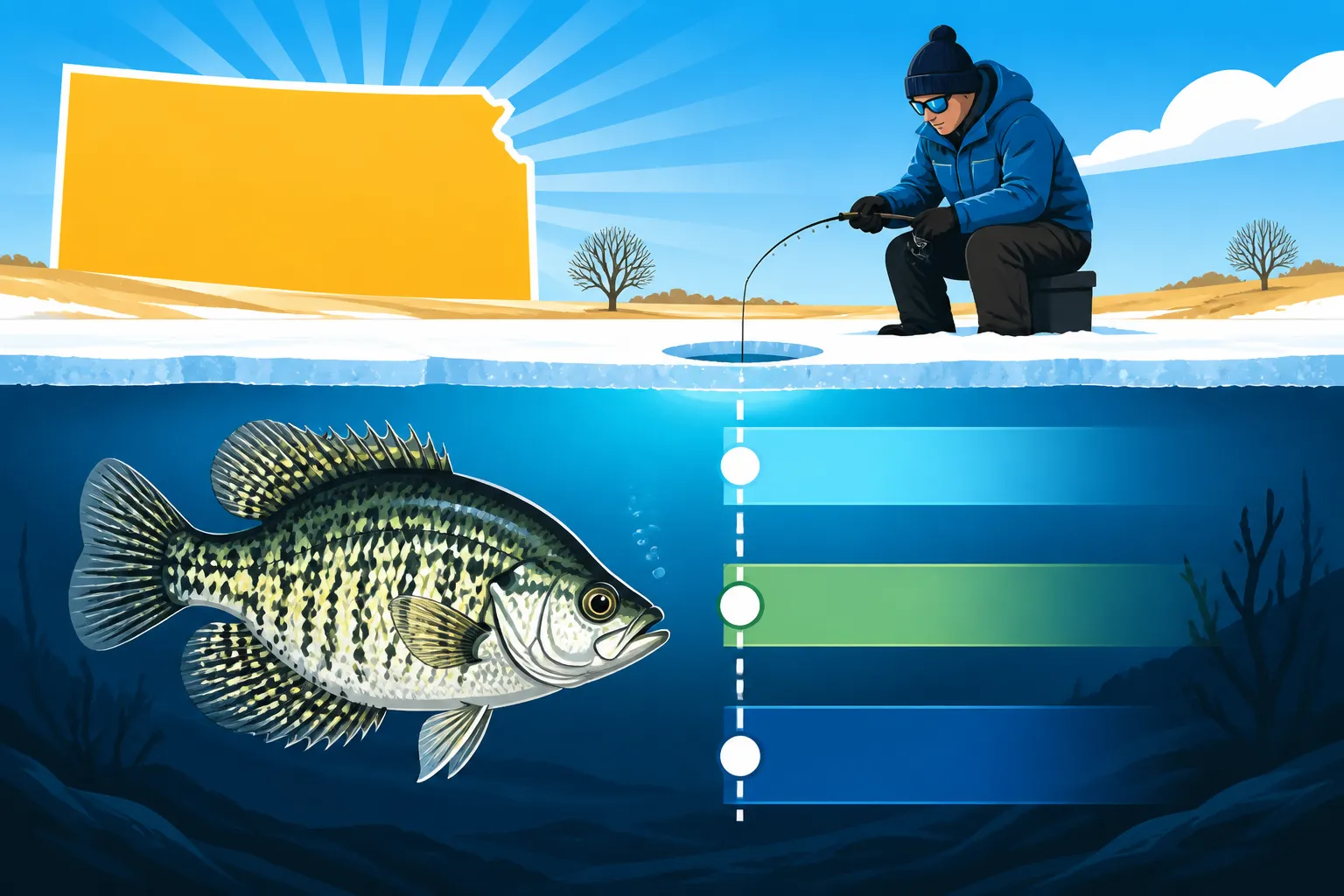
- Ice Cover: Under the ice, crappie tend to suspend more frequently than when fishing open water. They might be 5-15 feet below the ice, even if the bottom is 30-40 feet down. This is why proper electronics are paramount for Ice Fishing Rules on Kansas Lakes and general ice fishing success.
Essential Techniques and Gear for Deep Winter Crappie Fishing in Kansas
Now that we know where to look, let's talk about how to catch them. Winter crappie fishing, especially when targeting deeper fish, demands a refined approach to both technique and tackle.
Electronics: Your Best Friend for Depth Finding
A high-quality fish finder is non-negotiable for serious winter crappie fishing. Whether you're in a boat or ice fishing, your electronics will tell you:
- Water Depth: Obvious, but crucial.
- Bottom Contour: Helps you identify channels, ledges, and humps.
- Structure: Shows submerged timber, brush piles, and rock.
- Baitfish Schools: Locate the crappie's food source.
- Crappie Marks: Distinguish individual fish or tight schools.
- Your Lure: Many modern units can even show you your jig descending and your jigging action, along with the fish's reaction to it.
For open water, a quality sonar/GPS combo like those found on Amazon can be invaluable. For ice fishing, a flasher or a portable unit with down imaging is paramount. Learning How to Use a Fish Finder on a Kansas Lake effectively will drastically increase your catch rates. Don't be afraid to invest in a good unit; it will pay dividends.
Rods, Reels, and Line for Sensitivity
Because winter crappie bites are often incredibly subtle, sensitivity is key.
- Rods: Look for a lightweight, sensitive rod, typically 5 to 7 feet long, with a fast or extra-fast action. This means the tip bends easily, but the backbone remains stiff, allowing you to feel the lightest tap and set the hook quickly. Graphite rods excel here. For ice fishing, an ultra-light action rod of 24-30 inches with a sensitive tip is perfect.
- Reels: A small spinning reel (500 or 1000 series) with a smooth drag is ideal. It needs to balance well with your rod.
- Line: This is where many anglers make mistakes. Go light!
- Monofilament: 2 to 4 lb test is common. It has some stretch, which can be forgiving, but less sensitive.
- Fluorocarbon: Similar in diameter to mono but with less stretch and higher sensitivity. It's also virtually invisible underwater.
- Braided Line: Extremely sensitive with no stretch, but it's visible. Many anglers use 4-6 lb braid with a 2-4 foot fluorocarbon leader (2-4 lb test) tied with a small swivel or an FG knot. This gives you the best of both worlds: sensitivity from the braid and stealth from the fluoro.
Using light line allows your small winter baits to have their best action and sink naturally. It also improves sensitivity. Check out our guide on the Best Rod and Reel Combo for Crappie for more detailed recommendations.
Baits and Lures for Deepwater Presentation
When crappie are deep and lethargic, you need offerings that are small, enticing, and presentable at depth.
- Small Jigs: Tiny jigs (1/32 to 1/16 oz) are staples. Tipping them with a small plastic body (tube, grub, or minnow imitation) is a classic. Colors often vary, but chartreuse, white, black, and natural shad patterns are consistent producers. You can find a vast selection of these on Amazon.
- Live Bait: Minnows are king for winter crappie. Hook them lightly through the lips or dorsal fin on a small jig head (1/32 or 1/16 oz) or a plain hook under a small split shot. Often, the livelier the minnow, the better. Waxworms or small crappie nibblers can also be effective add-ons. You can learn more about specific bait choices in our Best Bait for Kansas Crappie article.
- Blade Baits & Spoons: Small blade baits or jigging spoons (1/8 to 1/4 oz) can be deadly, especially for fish suspended deeper. Their flash and vibration can draw strikes, and their weight helps them get down quickly.
- Small Crankbaits: Occasionally, super small, slow-rising crankbaits can work if crappie are slightly more active, but these are less common for deep winter presentations.
Effective Presentations for Suspended Crappie
Once you've located crappie on your electronics, the presentation is critical.
- Vertical Jigging/Deadsticking: This is the most common and effective technique. Drop your jig or minnow straight down to the depth where you see the crappie. If they're suspended at 25 feet, put your bait at 25 feet. Gently lift and drop the rod tip, or simply "deadstick" it, holding it perfectly still or with very minimal movement. Often, crappie will hit it on the fall or when it's completely motionless.
- Slow Trolling: If fishing from a boat and crappie are spread out over a large flat or channel, slow trolling with small jigs or minnow rigs can be effective. Use your trolling motor to move at a snail's pace, just fast enough to impart a subtle action to your bait.
- Ice Fishing Techniques: For ice fishing, vertical jigging is almost exclusively the method. Jig aggressively to attract fish, then slow down, almost to a dead stop, when fish approach your lure. Hits are often incredibly light – a slight tap, a feeling of "weight" on the line, or your line simply going slack. For more specific tactics, read up on Jigging Techniques for Kansas Crappie and How to Jig for Crappie in Rocky Cover.
Where to Find Deep Crappie in Kansas Lakes During Winter
Kansas offers a fantastic array of fishing opportunities, and knowing where to focus your efforts for winter crappie can save you a lot of time and cold fingers. While exact spots change, the types of locations crappie favor remain consistent. For a broader view of Kansas's top fisheries, check out our guide on the Best Fishing Lakes in Kansas.
Main Lake Channels and River Bends
Large reservoirs like Milford Lake, Cheney Reservoir, and Wilson Lake all have extensive old river or creek channels that meander through their basins. These are primary highways for baitfish and crappie in winter. Crappie will often suspend directly in the channel or along its edges, particularly where the channel makes a sharp bend or where there's a confluence of smaller creeks. These areas offer the greatest depth and stability.
When you're out there, use your map and fish finder to identify these deep channels. Look for humps or irregularities on the channel bottom, or points that extend into the channel. These small features can concentrate fish. Don't be surprised to find crappie suspended 10-20 feet off the bottom, even if the channel is 40-50 feet deep. They are following the bait.
Deep Brush Piles and Submerged Timber
Crappie love cover. In winter, this means finding deep brush piles, submerged timber, or even standing timber in the deeper sections of reservoirs. Many public lakes have intentionally placed brush piles, and anglers often mark their own. These provide excellent ambush points and shelter from current.
These structures are often found along creek channels, on deep points, or within large coves that have access to deep water. When you find one on your fish finder, meticulously work your bait around and through the cover. Crappie might be holding tight to the branches, requiring precise vertical presentations. A good pair of polarized sunglasses (even in winter!) can help you spot subtle cover if the water is clear enough.
Bluff Walls and Rock Piles
Bluff walls that drop off steeply into deep water are excellent winter crappie spots, particularly in lakes with rocky structures like Wilson Lake or Kanopolis Lake. The vertical face of the bluff provides immediate access to deep water and often harbors small caves or ledges that crappie can utilize. Rock piles or deep riprap areas, such as those found around dams or along causeways, also offer structure and warmth-holding properties that attract baitfish and subsequently crappie.
These areas are often subjected to wind and wave action, which can concentrate baitfish against them, making them prime feeding grounds. Cast parallel to the bluff or riprap, or position your boat over deeper water and cast towards the structure, allowing your bait to fall down the face.
Dams and Bridge Pilings
Man-made structures like dam faces and bridge pilings offer vertical relief in deep water, making them natural congregating points for crappie. The current created by dams can concentrate baitfish, and the pilings themselves provide abundant surface area for algae and invertebrates, which attract smaller fish, which in turn attract crappie.
Fishing around these structures requires careful boat control to position yourself effectively. Crappie might be holding anywhere from the very base of the pilings to halfway up in the water column. Always be mindful of local Kansas Fishing Regulations Explained and navigation rules when fishing near these structures, as some areas might have restrictions.
Table: General Winter Crappie Depth Guidelines in Kansas
Here's a quick reference for typical depths based on conditions you might encounter in Kansas:
| Winter Condition / Structure Type | Typical Crappie Depth Range (Feet) | Why They're There | Recommended Approach |
|---|---|---|---|
| Early Winter (Water Cooling) | 15-30 | Following baitfish, still somewhat active; seeking comfort | Vertical jigging, slow trolling small jigs |
| Mid-Winter (Stable Cold/Ice) | 25-45+ | Huddling on deep structure, less active; thermal stability | Finesse presentations, deadsticking minnows |
| Ice Fishing (Over Channels) | 20-40 (often suspended) | Suspended over deep water, near structure; oxygen, baitfish | Small jigs, light line, sensitive rod; electronics essential |
| Deep Brush Piles | 20-40 | Cover, ambush points for baitfish; thermal refuge | Dropping jigs directly into cover; precise bait placement |
| Main Lake Points/Bends | 25-50 | Ambush points for passing schools of bait; channel access | Electronics to locate schools, patient presentations |
| Warm Front/Sunny Days | 10-25 (briefly shallower) | Increased activity, baitfish move up slightly; light penetration | Slow retrieve jigs, small crankbaits near cover |
Remember, these are guidelines, not hard rules. Every lake and every day can be different, which is what makes winter crappie fishing such a rewarding challenge. If you're heading out to community lakes, don't forget to check the Kansas Community Fishing Lake Rules, as regulations can sometimes vary there.
Disclaimer
This article is for general informational purposes only and does not constitute professional advice. Laws, prices and regulations vary by location and change over time. Consult a qualified professional for guidance on your specific situation.