Kansas Flathead Catfish Facts and Limits
There’s a unique thrill that comes with chasing big catfish in Kansas, but few species ignite the passion and frustration of anglers quite like the flathead. These giants of the deep are notoriously elusive, demanding a different approach from their channel and blue catfish cousins, and their sheer power can test even the most seasoned fisher. This guide is all about demystifying the Kansas flathead catfish, diving deep into their habits, habitats, and the regulations designed to manage them, so you can increase your chances of hooking into one of these magnificent fish.
The Elusive Flathead: Understanding Kansas's Giant Bottom-Dweller
For many Kansas anglers, the flathead catfish is the ultimate prize. They're big, they fight hard, and they have a mystique about them that sets them apart. Unlike the opportunistic channel cat or the schooling blue cat, flatheads are solitary predators that stake out prime ambush points and wait for their prey. This makes them a challenging, but incredibly rewarding, species to target. You won't just stumble upon a flathead; you have to understand their world.
What Makes Flatheads Different?
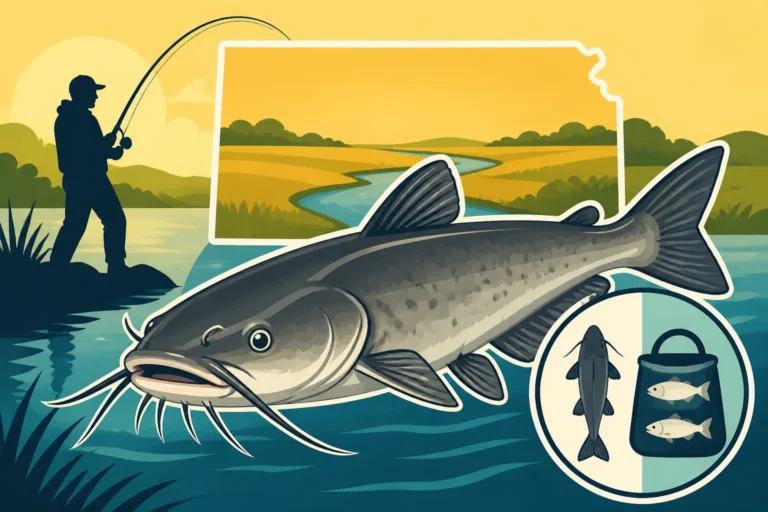
When we talk about "catfish" in Kansas, most people immediately think of the ubiquitous channel cat, which is certainly a blast to catch. But flatheads, often affectionately called "flatty" or "yellow cat" due to their distinctive coloring, are a breed apart. Their physical appearance alone hints at their predatory nature – a wide, flattened head that gives them their name, and a lower jaw that protrutrus out, perfect for scooping up unsuspecting baitfish. They’re built for power, not speed, preferring to pin their prey rather than chase it down.
What truly sets them apart is their diet and behavior. While channel and blue cats are fairly omnivorous, eating everything from stink bait to mussels, the flathead is almost exclusively a live bait predator. They're hunters, pure and simple, and their preference for live fish means you'll rarely find them hitting the same baits that entice other catfish species. This dietary specificity dictates much of the strategy an angler employs, requiring a different mindset and approach compared to a more general catfish outing. This isn't just a bigger catfish; it's a completely different challenge.
Why Anglers Love (and Fear) Them
The allure of the flathead lies in its sheer size and the epic battle it provides. Kansas waters are home to some truly massive flatheads, fish that can weigh in at over 50 pounds, sometimes even pushing past the state record. Imagine hooking into a fish that feels like you've snagged a submerged log, only for that log to suddenly surge downstream, stripping line from your reel with unbelievable force. That's the thrill of a flathead. It's a test of your gear, your patience, and your angling skill.
But that love often comes with a healthy dose of fear, or at least immense respect. These fish are not easily fooled. They are incredibly wary, intelligent, and often call the snaggiest, most obstacle-filled parts of a lake or river home. Losing a flathead to a submerged tree or a rocky outcrop is a common frustration, turning what could be a trophy into a heartbreaking tale of "the one that got away." Their solitary nature means you might spend hours, or even entire nights, targeting a single fish in a specific hole. It's not always about quantity with flatheads; it's about the quality of the fight and the immense satisfaction of finally landing one of these freshwater leviathans. For many, it's the pinnacle of Kansas Catfish Species Guide.
Identifying the Kansas Flathead Catfish
Before you can even think about what techniques you’ll use, it’s crucial to know what you’re looking for. In Kansas, we have three primary species of large catfish: channel, blue, and flathead. Each has distinct features that help with identification, which is important not only for bragging rights but also for adhering to specific regulations.
Key Physical Characteristics
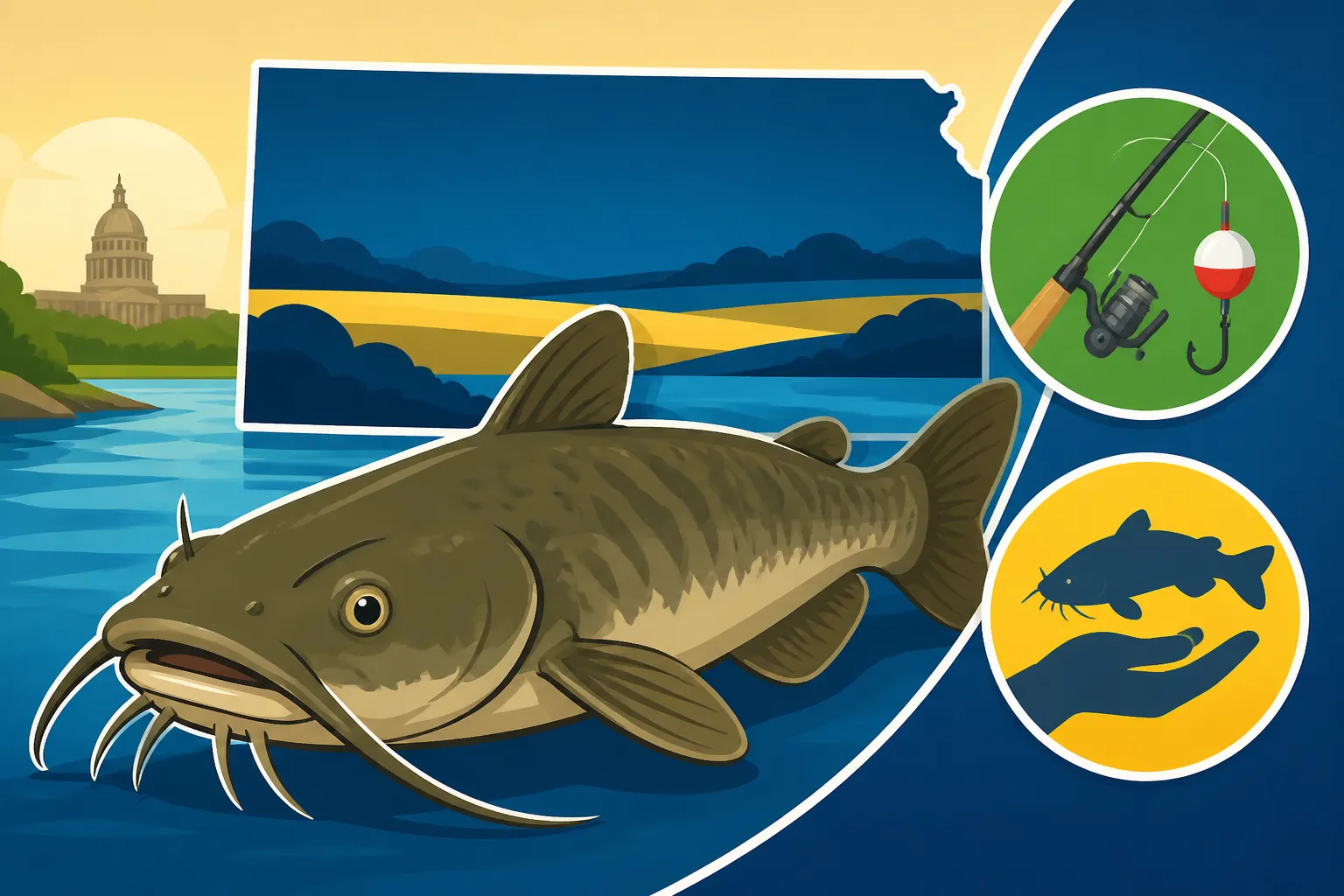
The flathead catfish truly lives up to its name. Its most distinguishing feature is, unsurprisingly, its head. It’s noticeably broader and flatter than that of other catfish, almost shovel-like. If you catch a catfish and its head seems disproportionately wide and flattened compared to its body, you’re likely looking at a flathead. Another key identifier is their lower jaw, which typically protrudes beyond the upper jaw, giving them a slight underbite. This isn't just a quirky feature; it's designed to help them scoop up prey.
Their coloration is also quite unique. Flatheads typically sport a mottled, patchy pattern of yellow, olive, brown, and sometimes even grey, often with dark spots or blotches across their body. This irregular pattern provides excellent camouflage in the muddy or rocky bottoms they prefer. Unlike the deeply forked tails of channel and blue catfish, the flathead's tail fin is either square or only very slightly notched, rarely deeply forked. These features, combined with their strong, serrated pectoral spines, make them quite recognizable once you know what to look for.
Distinguishing from Channel and Blue Catfish
When you're out on the water, especially in low light conditions or when the fish is thrashing, telling the difference between catfish species can be tricky. However, there are some clear distinctions.
Here’s a quick comparison to help you identify your catch:
| Feature | Flathead Catfish | Channel Catfish | Blue Catfish |
|---|---|---|---|
| Head Shape | Flat, broad head, small eyes | Smaller, somewhat pointed head | Large, distinctive hump, longer, flat head |
| Jaw | Lower jaw protrudes beyond upper | Upper jaw protrudes slightly or even | Upper jaw protrudes slightly or even |
| Tail Fin | Square or slightly notched, not deeply forked | Deeply forked | Deeply forked |
| Coloration | Mottled yellow, brown, olive with dark spots/blotches | Olive, light brown, grey with distinct dark spots (younger) | Bluish-grey to slate grey, no spots |
| Average Size | Very large, often 20+ lbs, can exceed 50 lbs | Medium, typically 2-10 lbs | Large, often 10-30 lbs, can exceed 100 lbs |
| Diet | Almost exclusively live fish and large prey | Omnivorous (insects, small fish, plants, detritus) | Omnivorous (fish, mussels, crustaceans, insects) |
The most common confusion is often between flatheads and blue catfish, especially larger specimens. While both can grow huge, the flathead's broad, flattened head and protruding lower jaw are usually good giveaways. Blue catfish, while also having a large head, tend to have a distinct hump on their back just behind the head, and their head is typically longer and more pointed than a flathead's broad, squat appearance. And, of course, that deeply forked tail on the blue cat is a dead giveaway compared to the flathead's square tail. Taking a moment to observe these features can help avoid misidentification and ensure you're compliant with Kansas Catfish Daily Limits.
Where and When to Find Flathead Catfish in Kansas
Knowing what a flathead looks like is one thing, but finding them in the vast waterways of Kansas is another challenge entirely. These fish are masters of their environment, and understanding their preferred hideouts and seasonal patterns is key to successful flathead fishing.
Preferred Habitats and Structures
Flathead catfish are creatures of structure and current. You won't typically find them milling around open water. Instead, they seek out deep, dark holes, submerged timber, rock piles, brush piles, and undercut banks. Think of them as the kings of the underwater jungle, each with their own throne. In rivers, they'll congregate in the deepest scour holes, especially those with plenty of fallen trees or log jams, often near current breaks. The eddy created by a downed tree on a river bend is prime flathead territory.
In Kansas reservoirs and larger lakes, they'll gravitate towards creek channels, old river beds, points, and humps that offer deep water access and plenty of cover. Submerged timber is a huge draw for flatheads in lakes like Milford or Cheney. They use these structures for ambush points, waiting patiently for a unsuspecting shad or bluegill to swim by. Understanding the topography of the lakebed, often with the help of a good fish finder or detailed contour maps (which you can often find resources for on Amazon), is essential for locating these prime flathead hangouts. Their preference for these snag-filled areas is precisely why heavy-duty tackle is a must.
Seasonal Movements and Activity
Like most fish, flathead activity is heavily influenced by water temperature and seasonal changes. While you can catch flatheads year-round in Kansas, certain times are more productive. Spring, as water temperatures rise, sees them become more active, moving out of their deep wintering holes to feed more aggressively in preparation for the spawn. During the spawn itself, typically in late spring to early summer when water temperatures hit the mid-70s, they become less interested in feeding as they focus on reproduction. Finding a nesting flathead during this time is like trying to find a needle in a haystack, and often not worth disturbing them.
Summer nights are perhaps the most legendary time for flathead fishing. As the sun sets, these nocturnal predators move out of their daytime hiding spots to actively hunt. This is when How to Catch Flathead Catfish at Night becomes a popular search term! They'll cruise the edges of creek channels, shallow flats adjacent to deep water, and around submerged structures. As fall approaches and water temperatures cool, they’ll enter a pre-winter feeding frenzy, bulking up for the colder months. This can be another fantastic time to target them before they retreat to their deepest, most secluded spots for winter dormancy. Paying attention to Kansas Fishing Seasons Guide and adapting your approach accordingly will greatly improve your success.
Kansas Regulations for Flathead Catfish
Fishing responsibly means understanding and adhering to the rules set forth by the Kansas Department of Wildlife, Parks and Tourism (KDWP). These regulations aren't just arbitrary; they're in place to ensure healthy fish populations for future generations of anglers. When it comes to flathead catfish, there are specific guidelines you need to be aware of.
Statewide Length and Creel Limits
For flathead catfish in Kansas, the statewide daily creel limit is five fish. This means you can keep a total of five flathead catfish per day. When it comes to length limits, there typically isn't a statewide minimum length limit for flathead catfish. This differs from other species where a certain length must be met before harvest is legal. However, it's always critical to double-check the most current regulations, as rules can change. A quick visit to the KDWP website or picking up the latest fishing regulations summary (often available at bait shops or through resources like Amazon) is highly recommended before any outing.
It's important to differentiate this from Kansas Channel Catfish Daily Limit or Kansas Blue Catfish Facts and Limits, as those species might have different length or creel limits depending on the body of water. For flatheads, the general rule is to be mindful of that five-fish daily limit, and if you're not planning to eat them, practicing responsible catch and release, especially for the larger breeding fish, is highly encouraged. Remember, regulations are there for a reason, and understanding them is a key part of ethical angling.
Special Considerations and Conservation Efforts
While the statewide limits provide a general framework, it's absolutely crucial to remember that some specific lakes or rivers in Kansas might have special regulations that supersede the general rules. For instance, a particular reservoir might have a protected slot limit for flatheads, meaning fish within a certain size range must be immediately released, or a reduced creel limit for conservation purposes. These exceptions are usually clearly posted at boat ramps and access points, but it's always best practice to consult the KDWP fishing regulations booklet for the specific body of water you plan to fish.
These localized regulations are often put in place to protect specific fisheries, promote trophy fish growth, or manage populations that might be under higher fishing pressure. Ignoring these special rules can lead to fines and penalties, which nobody wants. Beyond legal compliance, engaging in conservation efforts like carefully handling fish you intend to release, especially large flatheads, helps ensure their survival. Flatheads are relatively slow-growing fish, and losing a large breeding female can have a significant impact on local populations. By being informed and responsible, we all contribute to the long-term health of Kansas Fishing Regulations Explained and our cherished flathead fishery.
Mastering the Catch: Techniques for Kansas Flathead Catfish
Catching a flathead is an art form. It's not about finesse; it's about power, patience, and presenting the right bait in the right place. If you're used to catching channel cats on chicken liver, prepare for a completely different game.
Essential Gear and Bait Choices
When targeting flatheads, your gear needs to be robust. Forget your flimsy panfish rods; you'll need a heavy-action rod, typically 7-8 feet long, paired with a stout baitcasting reel capable of holding a significant amount of heavy line. Many anglers opt for 50-80 pound braided line, which offers incredible strength and abrasion resistance, crucial when battling a big fish around submerged timber. A Best Rod and Reel Combo for Catfish specifically designed for big game can be a great investment. Look for setups with strong drag systems, as a surging flathead can easily spool a lesser reel.
As for bait, this is where flatheads truly distinguish themselves. As mentioned, they are primarily live bait predators. Your best bet is fresh, lively baitfish native to the waters you're fishing. Common choices include bluegill, sunfish, shad, perch, or even small carp, used whole. The size of your bait often corresponds to the size of the flathead you're hoping to catch – don't be afraid to use a 6-8 inch baitfish if you're targeting trophy flatheads. You can sometimes find live bait at local shops or, if allowed by local regulations, catch your own. Rigging involves a large, sturdy circle hook (often 7/0 to 10/0) through the back or lips of the baitfish, a heavy sinker to keep the bait near the bottom in current, and a strong leader material. Using a float rig can also be effective to keep your bait just off the bottom in snaggy areas. For reliable hooks, heavy leaders, and specialized tools like long-nosed pliers or de-hookers, many anglers turn to Amazon for a wide selection.
Effective Fishing Techniques
There are several tried-and-true methods for targeting Kansas flatheads, each suited to different conditions:
- Anchor and Wait: This is perhaps the most common technique for boat anglers. Once you've identified a promising deep hole, log jam, or undercut bank, anchor your boat upstream and cast your live bait directly into or just above the structure. Let the current carry your bait naturally into the flathead's ambush zone. This method requires patience; flatheads don't always strike immediately. It's often a game of waiting them out.
- Drift Fishing: In larger rivers or reservoirs, drift fishing can be effective, especially at night. Allow your boat to slowly drift with the current or wind, dragging your live bait along the bottom. This covers more water and can help you locate active fish. Pay close attention to your rod tip for the subtle "thump" that signals a flathead has picked up your bait.
- Trotlining and Jug Fishing: For those looking to set multiple lines, Trotline Fishing Techniques in Kansas and Jug Fishing Techniques in Kansas are popular and highly effective for flatheads, especially when you can precisely place your lines in known flathead haunts. These methods allow you to present several live baits simultaneously, increasing your odds. Always be sure to check KDWP regulations regarding the number of hooks, lines, and tagging requirements for these methods.
- Bank Fishing with Heavy Tackle: Don't discount bank fishing! Many large flatheads are caught from shore, especially in Kansas River Catfish Spots. Find deep holes, fallen trees, or rip-rap banks that offer cover. A heavy setup is still paramount, and casting a live bait out and letting it soak in a prime location can yield incredible results. Patience is your greatest ally.
Regardless of the technique, the key is stealth, persistence, and placing your live bait directly in a flathead's strike zone. These fish are masters of ambush, so make it easy for them.
Ensuring the Future: Responsible Flathead Angling
Catching a flathead is an experience you won't soon forget, but it's important to remember our role in ensuring these incredible fish continue to thrive in Kansas waters. Responsible angling goes beyond just following the rules; it's about making conscious choices that protect the resource.
Catch and Release Best Practices
For many anglers, especially those targeting trophy flatheads, catch and release is a crucial practice. These large fish are often the prime breeders in the population, and their continued presence is vital for future generations. When you decide to release a flathead, especially a big one, follow these best practices:
- Minimize Fight Time: While exhilarating, a prolonged fight can exhaust a fish to the point where it can't recover. Use appropriate heavy tackle to land the fish as quickly as possible without over-stressing it.
- Handle With Care: Flatheads are incredibly powerful. Avoid dragging them on the bank or concrete. If possible, keep the fish in the water while you remove the hook. If you must bring it aboard, use a large, soft-mesh landing net or a sturdy gripping tool (like a lip gripper) that supports the fish's weight. Avoid holding large flatheads vertically by their lower jaw, as this can damage their spine and internal organs. Instead, support their belly with one hand while holding the lip with the other.
- Quick Hook Removal: Use needle-nose pliers or a de-hooking tool to remove the hook as quickly and gently as possible. If the hook is deeply swallowed, consider cutting the line as close to the hook as you can; the hook will often rust out.
- Revive Before Release: Gently hold the fish upright in the water, ideally facing into a mild current, until it regains its strength and can swim away under its own power. Never simply toss an exhausted fish back into the water. Watch it swim away strongly before you move on.
Practicing careful catch and release, especially for those larger, more valuable breeding fish, is one of the best things we can do for flathead populations.
Protecting Flathead Populations for Tomorrow
Beyond individual catch and release, there are broader actions we can take to protect flathead catfish in Kansas. Understanding the fragility of their habitat is key. Flatheads rely on healthy river and lake ecosystems with abundant submerged cover and clean water. Advocating for environmental protection, participating in local clean-up efforts, and being mindful of your impact on the waterways are all ways to contribute.
Furthermore, accurately reporting your catches, especially if you land an unusually large fish or notice something concerning about the fishery, helps KDWP biologists monitor populations and adjust management strategies. Remember, flatheads are long-lived and slow-growing fish. A 40-pound flathead could be decades old. Each one is a valuable part of the ecosystem, not just a target for our angling pleasure. By respecting the resource, following Kansas Fishing Regulations Explained, and practicing thoughtful angling, we can ensure that the thrill of chasing Kansas flatheads remains a part of our state's rich fishing heritage for generations to come.
Disclaimer
This article is for general informational purposes only and does not constitute professional advice. Laws, prices and regulations vary by location and change over time. Consult a qualified professional for guidance on your specific situation.