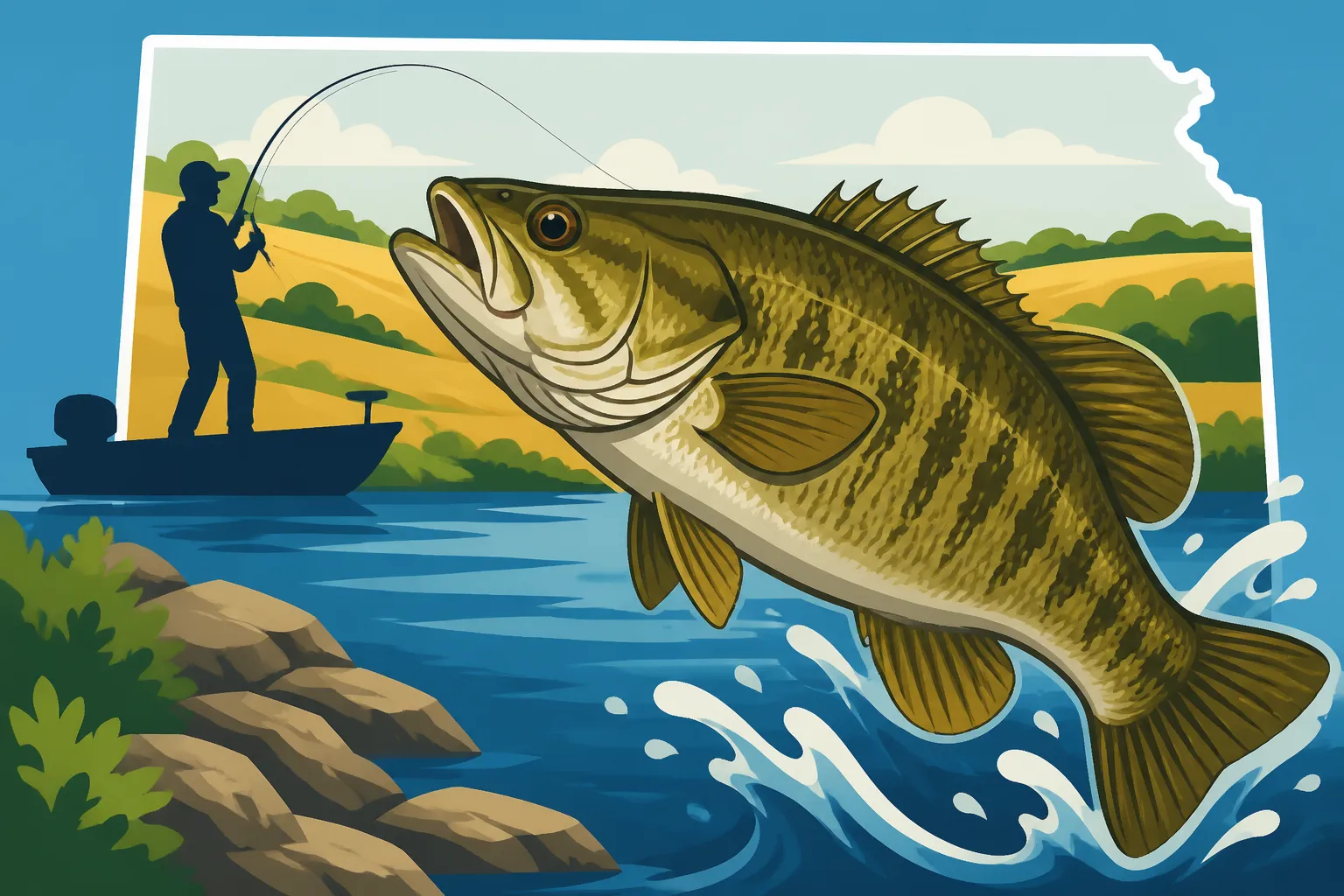
Kansas Smallmouth Bass Facts
Many anglers in Kansas are intimately familiar with largemouth bass, chasing them in farm ponds and weed-lined coves across the state. But there's another hard-fighting, bronze-backed dynamo that calls Kansas waters home: the smallmouth bass. Often overlooked or misunderstood, these aggressive fish present a unique challenge and a thrilling reward for those willing to learn their secrets. This guide will dive deep into everything you need to know about Kansas smallmouth bass, from identification to preferred habitats, behaviors, and the best ways to target them, ensuring you’re well-equipped for your next angling adventure.
Smallmouth Bass: A Unique Kansas Challenge
For a long time, when people thought of bass fishing in Kansas, their minds immediately went to the largemouth. And for good reason – largemouth are abundant and popular here. But the smallmouth bass, with its distinctive fighting style and preference for cooler, clearer, rockier waters, offers a different kind of thrill. They’re not as widespread as their largemouth cousins in every single body of water, but where they do thrive, they truly shine, providing an angling experience that many consider to be superior in sheer excitement.
Beyond the Largemouth Shadow
It's easy to assume all bass fishing is the same, especially if you've spent years honing your skills on largemouth. However, smallmouth bass occupy different niches and react to different stimuli than largemouth. They’re often found in areas that largemouth avoid, preferring hard bottom, rocky structures, and current. This means you can't just throw the same old spinnerbait into a lily pad field and expect results. Smallmouth require a different approach, a keen eye for subtle structural changes, and an understanding of their unique behaviors. This distinction is precisely what makes them so captivating; they force you to think differently, to adapt, and to expand your angling repertoire. It’s not just about catching a bass; it’s about catching the right bass in its domain.
The Fight of a Lifetime
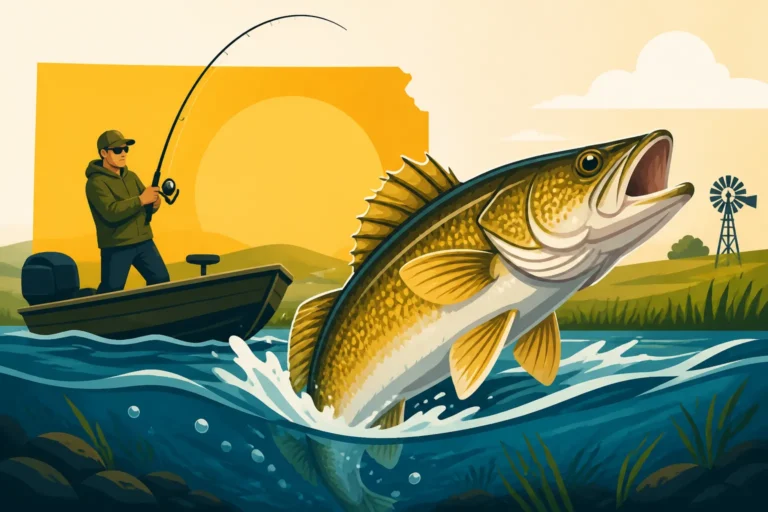
If you’ve ever hooked into a solid smallmouth, you know exactly what I’m talking about. Unlike the largemouth’s powerful initial run and dive into cover, a smallmouth is famous for its acrobatic leaps, head shakes, and relentless, never-give-up attitude. They often fight all the way to the boat, making every second of the retrieve an adrenaline-pumping experience. These fish are pound-for-pound some of the strongest freshwater fighters you’ll encounter, and landing a good one after a spirited battle is a truly satisfying accomplishment. This tenacious spirit is why many anglers travel specifically to target them, appreciating the challenge and the pure excitement they bring to the end of the line. Prepare for a battle, because a Kansas smallmouth isn't going to give up without a spectacular show.
Identifying Kansas Smallmouth Bass
Knowing what you’re casting for is half the battle, and correctly identifying a smallmouth bass is crucial. While they share the "bass" name with largemouth, there are several key features that set them apart. Misidentification can lead to incorrect fishing techniques, or worse, misinterpreting fishing regulations specific to each species.
Key Physical Characteristics
Smallmouth bass ( Micropterus dolomieu ) typically have a more streamlined, torpedo-shaped body compared to the bulkier largemouth. Their color can vary greatly depending on water clarity and habitat, ranging from a dark bronze to a lighter olive-green, often with vertical bars or blotches along their sides that may appear as distinct stripes or more mottled patterns. A key identifier is their eye color, which is usually reddish. Perhaps the most defining characteristic, and where they get their name, is the size of their mouth: when closed, the upper jaw of a smallmouth does not extend beyond the back edge of the eye. This is a crucial detail for telling them apart from largemouth. Their dorsal fin is also subtly different, appearing less deeply notched than that of a largemouth. You can clearly see these characteristics once you know what to look for.
Smallmouth vs. Largemouth: Spotting the Differences
The difference between smallmouth and largemouth bass can sometimes be tricky for beginners, especially when they're juveniles. However, a few simple checks will clear up any confusion. The most reliable method is examining the jawline. For a smallmouth, as mentioned, the corner of the mouth extends only to about the middle of the eye, or just slightly past it. For a largemouth, the jaw extends well past the back edge of the eye. Another good indicator is the dorsal fin; the largemouth’s dorsal fin has a much more pronounced, almost complete, separation between the spiny front portion and the soft-rayed back portion. The smallmouth's dorsal fin is still two parts but is much more subtly connected. Finally, look at the body pattern: largemouth usually have a distinct horizontal stripe down their side, while smallmouth often have vertical bars or splotches, though these can fade depending on the fish's mood and environment. For a deeper dive into this, check out our guide on Largemouth vs Smallmouth Bass Identification.
Here's a quick comparison table:
| Feature | Smallmouth Bass | Largemouth Bass |
|---|---|---|
| Jawline | Upper jaw ends at or before the back of the eye | Upper jaw extends well past the back of the eye |
| Body Shape | Streamlined, torpedo-shaped | Stockier, bulkier |
| Color/Pattern | Bronze to olive-green, often with vertical bars/blotches | Green to dark green, distinct horizontal stripe |
| Dorsal Fin | Connected, but with a slight dip/notch | Deeply notched, almost separated into two fins |
| Eye Color | Often reddish | Typically golden or brown |
Where to Find Smallmouth Bass in Kansas
Kansas isn't typically thought of as a smallmouth haven compared to states like Michigan or Wisconsin, but we have some fantastic opportunities if you know where to look. Smallmouth bass thrive in specific types of water, and understanding their preferred habitat is key to locating them. They are less tolerant of murky, warm, shallow water than largemouth, preferring cooler, clearer environments with plenty of structure.
Rocky Reservoirs and Clear Waters
Our large reservoirs, particularly those with significant rock and rip-rap, are prime smallmouth territory. They love areas with rocky points, submerged humps, broken rock banks, and deep rock ledges. These structures provide them with ambush points for prey, protection from predators, and cooler, oxygenated water. Clearer water also helps their sight-feeding strategy. Lakes like Wilson, known for its incredible clear water and abundant rock formations, are classic smallmouth strongholds. Milford Lake, another large reservoir, also offers excellent smallmouth opportunities, particularly in its rockier sections. Don't overlook smaller, clear state fishing lakes that might also have adequate rocky habitat. Remember, if you see exposed rock on the shore, there's a good chance that rock extends underwater, creating perfect smallmouth habitat. Consider exploring our Best Fishing Lakes in Kansas guide for more options.
River and Stream Strongholds
While less common, smallmouth bass can also be found in certain Kansas rivers and larger streams, particularly those with good flow, clear water, and rocky or gravel bottoms. They'll hug current breaks, hide behind boulders, and feed in riffles and pools that offer good oxygenation and food sources. These riverine smallmouth often exhibit an even stronger fight due to their constant battle with current. Accessing these areas might require wading or a kayak, offering a different kind of angling adventure. While not as prevalent as reservoir populations, the challenge of finding and catching a river smallmouth in Kansas is incredibly rewarding. Our Kansas River Fishing Guide can give you a good starting point for exploring these moving water options.
Specific Kansas Hotspots
When it comes to specific spots, there are a few places that consistently produce quality smallmouth.
- Wilson Lake: This lake is often hailed as the smallmouth destination in Kansas. Its incredibly clear water and vast expanses of sandstone and limestone rock formations create perfect habitat. Focus on points, submerged islands, and steep bluff walls. The Hell Creek area and Lucas Park are known hotspots. If you're serious about smallmouth, a trip to Wilson Lake Fishing Guide is a must.
- Milford Lake: As the largest lake in Kansas, Milford has a diverse fishery, including a respectable smallmouth population. Look for them around the dam area, rocky points along the main lake, and in the clearer sections of the upper reservoir where rock structures are present. Anglers often find success targeting rocky shorelines and transitions from rock to gravel. You can find more details in our comprehensive Milford Lake Fishing Guide.
- El Dorado Lake: This lake, particularly its eastern and northern rocky banks, can hold good numbers of smallmouth. While known for its striped bass and largemouth, the clear water and abundant rock near the dam and some of the larger islands are worth exploring. Check out El Dorado Lake Bass Fishing for more insights into this dynamic fishery.
- Lovewell Reservoir: Often overlooked, Lovewell offers clear water and rock habitat that can support smallmouth. Focus on the dam and any rip-rap or rocky points you can find.
Always remember that water clarity and temperature play huge roles. Smallmouth prefer cooler, clearer water, so during hot summer months, they'll often retreat to deeper, cooler sections of these lakes.
Smallmouth Bass Diet and Behavior
Understanding what smallmouth bass eat and how they behave throughout the year is crucial for consistently catching them. They are opportunistic predators, but they have distinct preferences and patterns that can be exploited by observant anglers.
Seasonal Feeding Patterns
Smallmouth bass are highly attuned to seasonal changes, which dictate their feeding patterns and locations.
- Spring (Pre-spawn and Spawn): As water temperatures rise into the 50s and 60s Fahrenheit, smallmouth move from their deeper winter haunts to shallower, rocky areas to feed aggressively in preparation for spawning. This is often an excellent time for targeting them, as they are actively hunting. They’ll look for areas protected from wind, often on the sunny side of rocky points or bays. Spawning typically occurs when water temperatures are consistently in the mid-60s, usually May to early June in Kansas. During the spawn, males guard nests on rocky or gravel bottoms, often in shallower water. While protective, they can be difficult to tempt with lures as their focus is on guarding.
- Summer: Once the spawn is over, smallmouth disperse. As water temperatures climb into the 70s and beyond, they'll often retreat to deeper, cooler water, relating to offshore structures like humps, deep points, ledges, and submerged timber. They might come shallow to feed during low-light conditions (dawn, dusk, or night) or when there's significant cloud cover. Finding deep, clear water access to these structures is key during the summer months. They’ll actively pursue baitfish and crayfish.
- Fall: As water temperatures begin to drop in the autumn, smallmouth once again become very active, feeding heavily to build up fat reserves for winter. They'll often return to shallower rocky points and flats during the day, following schools of baitfish. This can be one of the best times of the year to catch larger smallmouth, as they are actively "bulking up." Look for them around the same rocky structures they favored in spring, but potentially deeper as the season progresses.
- Winter: During the coldest months, when water temperatures dip below 45-50 degrees, smallmouth move to their deep-water wintering grounds. They become less active and feed less frequently, often suspending over deep rock piles or congregating in deep holes. Slow, subtle presentations are necessary to entice a strike during this period.
Spawning and Lifecycle
Smallmouth bass typically spawn in late spring to early summer in Kansas, usually when water temperatures reach a consistent 60-68 degrees Fahrenheit. Males clear out saucer-shaped nests on rocky or gravel bottoms, often in water ranging from 2 to 20 feet deep, depending on water clarity and available structure. After the female deposits her eggs, the male guards the nest diligently, fanning the eggs to keep them oxygenated and free from silt, and aggressively chasing away predators. This period of guarding makes them vulnerable to anglers, but many ethical anglers choose to avoid targeting bedding fish to ensure successful reproduction. Once hatched, the fry remain in the nest for a short period before dispersing. Smallmouth bass can live for many years, with some individuals reaching over 10 years old in healthy populations. Their growth rate is influenced by food availability, water quality, and genetics, but a 3-5 pound smallmouth is considered a trophy in Kansas, with bigger ones being quite rare and exceptional.
Effective Techniques for Kansas Smallmouth
Catching smallmouth bass requires a different approach than targeting largemouth. They are often sight feeders and will aggressively strike at baits that imitate their natural prey, but they can also be finicky. Precision, presentation, and understanding their environment are paramount.
Lure Selection and Presentation
Smallmouth bass are incredibly receptive to a variety of lures, especially those that mimic crayfish, baitfish, or even insects. The key is often a natural presentation.
- Crankbaits: Small to medium-sized crankbaits, especially those with crayfish patterns or natural baitfish colors, are incredibly effective. Lipless crankbaits can be great for covering water over rocky flats.
- Spinnerbaits & Chatterbaits: While not always the first choice, smaller spinnerbaits or chatterbaits can be excellent for covering water and triggering reaction strikes, especially around submerged brush or rock piles.
- Jigs: Finesse jigs, football jigs, and hair jigs tipped with plastic trailers are phenomenal smallmouth baits. Crawfish-imitating jigs crawled along the bottom are deadly.
- Soft Plastics: Tubes, grubs, drop shot worms, and creature baits are smallmouth staples. Tubes, in particular, are excellent for mimicking crayfish and can be fished by dragging, hopping, or subtle jerking motions. Drop-shotting a small worm is perfect for finicky, suspended smallmouth in clear water. Look for a good selection of soft plastics on platforms like Amazon to build your arsenal.
- Topwater Lures: During low-light conditions or when smallmouth are actively chasing bait on the surface, topwater lures like poppers, walking baits, and prop baits can provide explosive strikes. There's nothing quite like a smallmouth exploding on a topwater lure. For specific recommendations, our article on Best Topwater Lures for Bass might offer some good crossover ideas.
The presentation often involves a slow, deliberate retrieve when fishing bottom baits, allowing the lure to mimic a crawling crayfish. For moving baits, a steady retrieve with occasional pauses or twitches can be effective. Always vary your retrieve until you find what the fish prefer on that particular day.
Best Baits for Finicky Smallmouth
Sometimes, when the bite is tough, live bait can be the ultimate equalizer for finicky smallmouth.
- Crayfish: Without a doubt, live crayfish are probably the number one natural food source for smallmouth bass. If you can catch them in the lake you're fishing, they will almost guarantee a bite. Rig them on a small jig head or a weedless hook.
- Minnows/Shiners: Live minnows, particularly shiners or small shad, are excellent for enticing strikes, especially from larger smallmouth. Rig them under a bobber near structure, or slow-troll them with a weight.
- Nightcrawlers: While perhaps more commonly associated with panfish, a lively nightcrawler fished on a plain hook with a split shot can be irresistible to smallmouth, especially if they are feeding on the bottom.
When using live bait, make sure your presentation is natural and that the bait is healthy and active. Smallmouth will often inspect the bait before committing, so patience is key. Having a small aerator for your live bait bucket, easily found on Amazon, can make a huge difference in keeping your bait lively throughout the day.
Gear Considerations for the Fight
Given the smallmouth's notorious fighting ability, having the right gear is crucial. You don't want to bring a knife to a gunfight!
- Rods: A medium-light to medium-power spinning rod, typically 6'6" to 7' in length, is ideal for most smallmouth techniques. This provides enough sensitivity for subtle bites and enough backbone to handle their powerful runs. For techniques like drop-shotting, a longer, more sensitive rod can be beneficial.
- Reels: Pair your rod with a quality spinning reel in the 2000-3000 size range, offering a smooth drag system. A fast retrieve ratio can be helpful for quickly taking up slack.
- Line: For clear Kansas waters, fluorocarbon line in 6-10 lb test is an excellent choice for its low visibility and sensitivity. Alternatively, a braided mainline (10-20 lb) with a fluorocarbon leader (6-10 lb) offers the best of both worlds – sensitivity and strength from the braid, and stealth from the fluorocarbon. Our Best Rods and Reels for Kansas Fishing guide has more detailed advice for various species.
- Electronics: A good fish finder can be invaluable for locating submerged rock piles, humps, and baitfish schools where smallmouth often congregate. Side imaging and down imaging are particularly helpful for scouting structure.
Having a sturdy landing net is also a good idea, as smallmouth will often make a final surge and leap right at the boat.
Conservation and Regulations for Smallmouth Bass
As with any prized game fish, responsible angling and adherence to regulations are essential to ensure healthy smallmouth bass populations for future generations of Kansas anglers. Our Kansas Fishing Regulations Explained article covers general rules, but let's look at smallmouth specifics.
Understanding Creel and Length Limits
Kansas has specific regulations for smallmouth bass, which are different from largemouth bass, especially in certain bodies of water. These regulations are designed to protect the species and promote a healthy size structure. For example, many Kansas reservoirs have a 15-inch minimum length limit on smallmouth bass, meaning any fish shorter than that must be immediately released. The daily creel limit for smallmouth bass is typically 5 fish, but this can vary by specific lake or river. It is absolutely vital that you check the most current Kansas Department of Wildlife, Parks and Tourism (KDWPT) fishing regulations summary before you head out, as these rules can change. Regulations are often posted at boat ramps and access points, and the KDWPT website is always the definitive source. Always be prepared to measure your catch quickly and accurately, and understand the difference in rules between species, which you can explore further in Kansas Daily Creel Limits by Species.
Protecting Kansas's Smallmouth Population
Catch and release is a crucial practice for maintaining strong smallmouth bass populations, especially for larger, older fish that contribute significantly to the gene pool. If you plan to release a fish, handle it carefully with wet hands, minimize its time out of water, and use de-hooking tools if necessary. If a fish is deeply hooked, it’s often best to cut the line rather than try to remove the hook, as this can cause more damage. Practicing good angling ethics ensures that those hard-fighting smallmouth are there for others to enjoy, and to continue to spawn and replenish the fishery. Support conservation efforts by participating in angler surveys and reporting any suspicious activities that might harm fish populations or habitats. Educate yourself on general Kansas Fishing Seasons Guide to understand peak times of vulnerability for fish like smallmouth during their spawning cycles.
Remember, every decision we make on the water has an impact. By following regulations, practicing responsible catch and release, and respecting their unique habitat, we can all contribute to the thriving future of Kansas smallmouth bass fishing.
Disclaimer
This article is for general informational purposes only and does not constitute professional advice. Laws, prices and regulations vary by location and change over time. Consult a qualified professional for guidance on your specific situation.