Best Bait Bucket for Live Minnows
There's nothing quite as frustrating as showing up at your favorite Kansas fishing spot, bucket in hand, only to find your carefully purchased live minnows have gone belly-up. It's a common problem that costs money, wastes time, and can really dampen a promising fishing trip. This guide is all about helping you beat that frustrating scenario, diving deep into what makes a great minnow bait bucket and how to keep your little swimmers lively and ready to catch some fish.
The Universal Frustration of Keeping Minnows Alive for Kansas Fishing
Every angler in Kansas has experienced it: you buy a scoop of frisky minnows, optimistic for a day of reeling in crappie, walleye, or even some feisty white bass. You get to the lake, lift the lid, and there they are – floating lifelessly. It's not just a minor inconvenience; it's a genuine pain. You've spent your hard-earned money, invested time, and now your primary bait is useless.
The truth is, live bait often makes all the difference. The natural movement, the subtle vibrations, the real scent – these are irresistible to many game fish. A lively minnow darting around on your hook is far more enticing than a still, dead one. This is especially true when you're targeting picky eaters like walleye or trying to draw out shy crappie from heavy cover. When your minnows die prematurely, you're not just out the cost of the bait; you're potentially missing out on bites and a successful day on the water.
There are several culprits behind the untimely demise of your minnows. The most common are a lack of oxygen, extreme water temperatures, overcrowding, and handling stress. Imagine being stuck in a small, warm container with hundreds of your closest friends, slowly running out of air. That's often the reality for minnows in a subpar bait bucket. Kansas weather, particularly during the blazing summer months or chilly ice fishing season, exacerbates these issues, making temperature control and aeration paramount.
Essential Features That Make a Minnow Bucket a Lifesaver
To combat these challenges, a well-designed minnow bucket isn't just a container; it's a miniature life support system. Investing in the right one can dramatically increase your bait's lifespan and your fishing success.
Aeration Systems for Sustained Oxygen
Oxygen is perhaps the single most critical factor in keeping minnows alive. Just like us, fish need to breathe. As minnows consume oxygen and produce waste, the water quality rapidly deteriorates, leading to stress and death. An effective aeration system is your best defense.
Most modern bait buckets come with, or are designed to accommodate, a battery-powered aerator. These little devices use an air pump to push air through a tube and into an air stone, which creates a stream of fine bubbles. These bubbles increase the surface area for oxygen exchange, essentially "breathing" life back into the water. Some higher-end models integrate the aerator directly into the bucket's lid, offering a more compact and streamlined solution. When choosing an aerator, consider battery life – you don't want it dying halfway through a long day of Kansas Fishing Seasons Guide. Look for models that use standard D-cell batteries for easy replacement, and perhaps even a spare set for good measure. For the truly dedicated angler, some premium portable aerators can even run off a 12-volt battery from your boat or vehicle, providing continuous power.
Insulation and Temperature Control
Kansas weather is notoriously fickle. A beautiful spring morning can turn into a sweltering afternoon, and winter days can swing wildly in temperature. These fluctuations are lethal for minnows. Water temperature dictates how much oxygen water can hold (colder water holds more) and also impacts the minnows' metabolism and stress levels.
An insulated bait bucket acts like a miniature cooler, protecting your minnows from rapid temperature changes. The best buckets feature double-wall construction, often with an insulated foam core, to maintain a stable water temperature. During the summer, this means keeping the water cool, crucial when you're Kansas Summer Fishing Guide for big channel cats or wipers. You can even add a frozen water bottle or a small ice pack to further drop the temperature without diluting the water. In contrast, during the chilly Kansas Ice Fishing Guide months, insulation helps prevent the water from freezing, offering a protective barrier against the cold air. Some buckets are even dark-colored to help absorb sunlight in cooler conditions, or light-colored to reflect it in warmer ones.
Size, Shape, and Portability
The size and shape of your minnow bucket matter more than you might think. Overcrowding is a surefire way to stress out and kill your bait. A general rule of thumb is to allow enough space for your minnows to swim comfortably without constantly bumping into each other. A larger capacity bucket might be necessary if you're planning a full day of Kansas Crappie Fishing Techniques and need a hundred lively minnows.
Consider the dimensions: a wider, shallower bucket often provides better surface area for oxygen exchange than a tall, narrow one of the same volume, even with aeration. Portability is also key. Does it have a sturdy, comfortable handle? Does it fit easily in your boat, kayak, or vehicle? For bank anglers, a lighter, more compact design might be preferable, especially if you have a bit of a hike to your favorite spot. Some buckets even feature clip-on handles designed to attach to the side of a boat or dock.
Durability and Design for Longevity
A bait bucket lives a tough life, often getting tossed around boats, bumped on shorelines, and exposed to the elements. Look for buckets made from robust, UV-resistant plastics that won't crack or degrade after a few seasons. The lid design is also critical. A secure, easy-to-open lid is essential to prevent spills and keep your minnows from jumping out. Many quality buckets have a hinged lid with a small access door, allowing you to grab a minnow without exposing the entire bucket to the elements or losing water. Easy cleaning features are also a plus, as residual bait slime and waste can quickly foul water and harbor bacteria. A smooth interior and a drain plug can make cleanup a breeze, preparing your bucket for its next adventure.
Choosing the Right Minnow Bucket for Your Kansas Angling Adventures
With so many options on the market, selecting the perfect minnow bucket can feel a bit overwhelming. But by considering your typical fishing style and the conditions you'll face in Kansas, you can narrow down the choices significantly.
Standard Floating Buckets
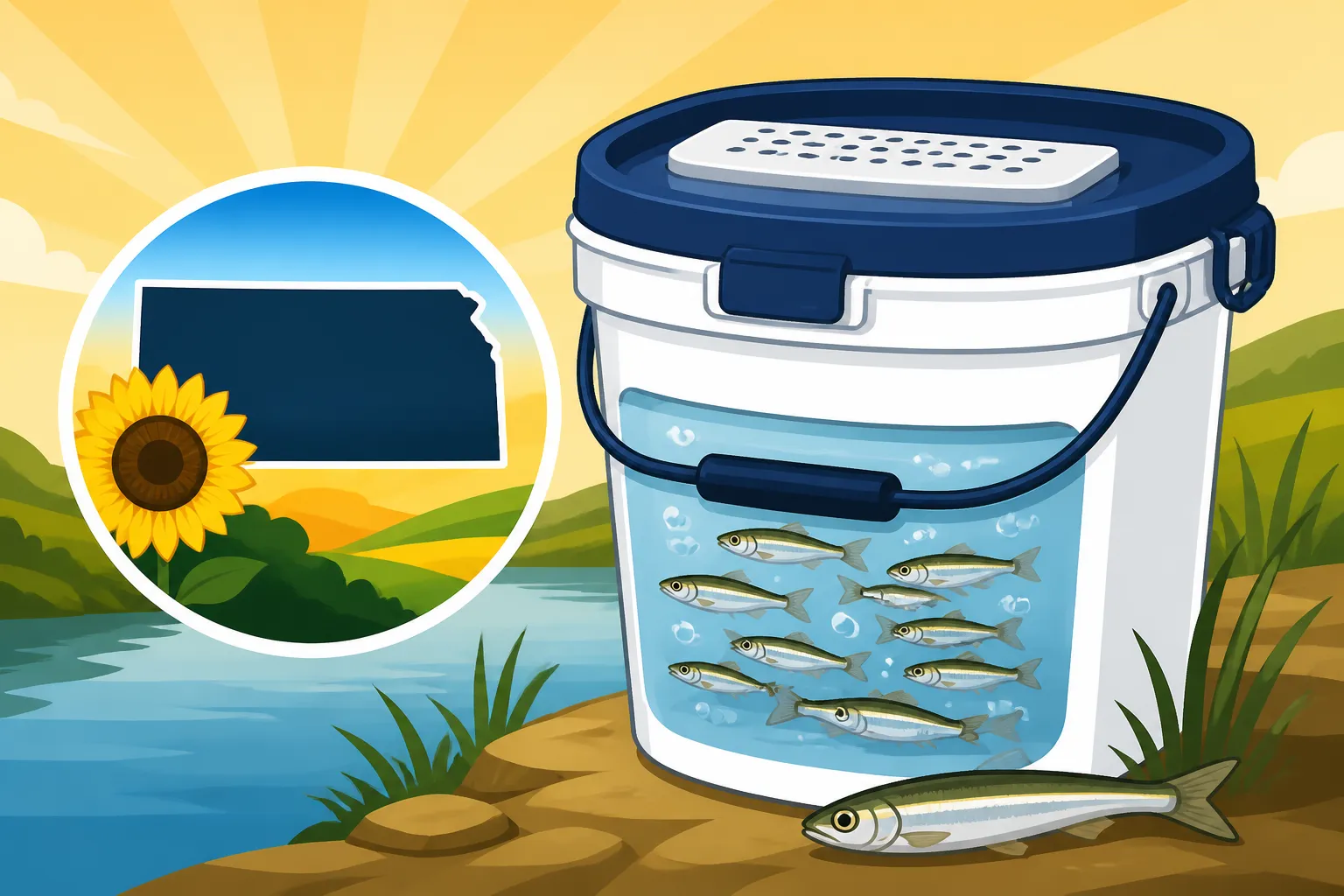
These are the classic, often inexpensive, plastic buckets with a perforated inner basket that allows lake water to circulate. They're designed to be tethered and float alongside your boat or off a dock. The idea is that the natural water flow through the perforations keeps the minnows oxygenated and at the ambient water temperature.
- Pros: Very affordable, simple to use, and constantly refreshes water with lake water. Great for short trips or when you're fishing near where you launch your boat.
- Cons: Highly dependent on lake water quality and temperature. If the lake water is warm or stagnant, your minnows will suffer. Not suitable for transport in a vehicle (they'll spill) or for keeping minnows alive long-term. They also don't work for Kansas Ice Fishing Guide.
- Best Use: Day trips on lakes or ponds where water temperatures are moderate, and you're fishing directly from a boat or fixed location. Think a calm day crappie fishing on Clinton Lake.
Insulated Aerated Buckets
These are the premium choice and the ultimate solution for serious anglers, especially in Kansas where conditions can vary wildly. They combine the best of both worlds: insulation for temperature stability and an integrated or attachable aerator for constant oxygen supply. You'll find a wide variety of these at stores like Bass Pro Shops or available through online retailers like Amazon, offering different capacities and features.
- Pros: Maximizes minnow lifespan by controlling both temperature and oxygen. Excellent for long days on the water, transporting minnows, or keeping them overnight. Adaptable to all seasons, from summer heat to winter ice.
- Cons: Higher initial cost due to the insulation and aerator technology. Requires batteries for the aerator. Can be a bit bulkier.
- Best Use: Any serious fishing trip in Kansas, especially during extreme temperatures. Ideal for Kansas Walleye Fishing Techniques on big reservoirs like Milford Lake, where you might be out all day, or during the Kansas Winter Trout Fishing Guide season where stable water temperatures are key. Many anglers consider this a non-negotiable piece of gear.
Collapsible and Portable Buckets
For anglers who value convenience and mobility, collapsible minnow buckets offer an interesting alternative. These are typically made from soft, durable materials like EVA plastic or canvas, often with a waterproof lining. They can be folded flat or compressed for easy storage when not in use.
- Pros: Highly portable and space-saving. Great for backpackers, kayak anglers, or those with limited storage space.
- Cons: Often lack insulation and integrated aeration, though some can accommodate a small clip-on aerator. May not be as durable as hard-sided buckets. Generally hold fewer minnows.
- Best Use: Short excursions, hike-in fishing spots, or when fishing from a kayak where space is at a premium. If you're exploring Kansas River Fishing Guide spots on foot, this could be a handy option.
DIY Solutions and Their Limitations
Sometimes, desperation leads to creativity. Many anglers have tried repurposing an old ice chest or a 5-gallon bucket for their minnows. While these can work in a pinch, they usually come with significant drawbacks.
- Ice Chests: An insulated cooler can certainly keep water cool, but without proper aeration, your minnows will quickly deplete the oxygen. Adding an aerator solves the oxygen problem, but the opaque nature of most coolers makes it hard to check on your bait without opening the lid, letting out valuable cool air. They're also often quite heavy and bulky.
- Repurposed Buckets: A standard 5-gallon bucket is cheap and readily available, but it offers zero insulation and no aeration. Minnows in these buckets will succumb to temperature swings and oxygen depletion very rapidly. You'd need to add an aerator and manage water temperature with ice bottles, which can be a hassle.
- Limitations: While these DIY options can save money upfront, they often lead to dead bait, frustration, and ultimately, less successful fishing trips. The investment in a purpose-built minnow bucket is usually worth it for the peace of mind and lively bait.
| Minnow Bucket Type | Key Features | Pros | Cons | Ideal Kansas Use Case |
|---|---|---|---|---|
| Standard Floating | Perforated inner basket, floats | Affordable, simple, uses lake water | No insulation, no active aeration, spills | Short trips, boat-side, mild weather |
| Insulated Aerated | Double-wall insulation, pump | Max minnow life, temp control, oxygen | Higher cost, requires batteries, bulky | All-season, long trips, transport, extreme weather |
| Collapsible/Portable | Flexible material, folds flat | Space-saving, lightweight, easy storage | Less insulation/aeration, smaller capacity | Hike-in spots, kayak fishing, short trips on foot |
| DIY (e.g., Cooler) | Insulated (sometimes), basic | Can be cost-effective for parts | Requires add-ons, less convenient, opaque | Emergency use, highly modified with aerator & care |
Beyond the Bucket: Advanced Tips for Maximizing Minnow Lifespan
Even the best minnow bucket needs a little help. There are several practices you can adopt to significantly extend the life of your minnows, ensuring they're lively when you need them most.
Water Quality is Key
The water you put your minnows in is paramount. Never, ever use chlorinated tap water directly from the faucet. Chlorine is a disinfectant and is lethal to fish. If tap water is your only option, you'll need to treat it with a dechlorinating agent (available at any pet store) or let it sit out in an open container for at least 24 hours to allow the chlorine to dissipate.
Ideally, use water from the very lake or pond you plan to fish. This water is already acclimated to the temperature, pH, and mineral content that your minnows are used to, reducing stress. When transferring minnows, try to match the water temperature as closely as possible to avoid temperature shock. A sudden change of more than a few degrees can be fatal. This is especially critical when buying minnows from a bait shop and then introducing them to much colder or warmer lake water. Kansas Fishing Regulations Explained often emphasize protecting water quality, and this applies to your bait water too!
Handling and Acclimation
Minnows are delicate creatures, and rough handling causes immense stress. Always use a soft net or your hands to gently scoop them out of the bucket. Avoid squeezing them or letting them flop around on the ground. When moving minnows from one container to another, take your time and gently acclimate them by slowly adding small amounts of the new water to their existing water over 15-20 minutes.
Also, be mindful of direct sunlight. Even if your bucket is insulated, direct sun exposure on a hot Kansas day can rapidly heat the water and create a thermal shock zone for your minnows. Keep your bucket in the shade or under a wet towel to help maintain a stable, cool temperature. If you are interested in Best Cooler Size for a Day of Fishing, often a good sized cooler can help keep your bait cooler as well, if kept separate.
Feeding (or Not Feeding) Your Minnows
For short fishing trips (a day or less), it's generally best not to feed your minnows. Digestion consumes oxygen and produces waste, both of which degrade water quality faster. Minnows can easily go for a day or two without food.
If you plan to keep minnows for an extended period, say overnight or for a multi-day trip, then minimal feeding might be necessary. Use a very small amount of finely crushed flake food specifically designed for feeder fish. Feed sparingly, only once a day, and only as much as they can consume in a few minutes. Any uneaten food will quickly foul the water. Remember, the goal is survival, not growth.
Proper Storage and Maintenance
Your minnow bucket needs regular cleaning. After each trip, completely empty and rinse the bucket with fresh water. Use a soft brush to scrub away any slime or residue. Avoid harsh chemical cleaners or detergents, as their residues can be toxic to minnows. Let the bucket air dry completely before storing it to prevent mold and mildew growth.
If your bucket uses an aerator, make sure to clean the air stone regularly, as it can get clogged with algae or mineral deposits, reducing its efficiency. Check the batteries before each trip; dead batteries are useless. Keeping a spare set of Best Bait Shops Near Milford Lake or Best Tackle Shops in Wichita can be a lifesaver. Properly maintained gear, including your minnow bucket, ensures that when it's time to head out for some Kansas White Bass Run Timing or to chase Kansas Catfish Daily Limits, your bait will be as ready as you are.
Disclaimer
This article is for general informational purposes only and does not constitute professional advice. Laws, prices and regulations vary by location and change over time. Consult a qualified professional for guidance on your specific situation.