Kansas Fishing Seasons and Limits
Trying to figure out all the fishing seasons and limits in Kansas can feel like navigating a maze blindfolded. You just want to enjoy a peaceful day on the water, maybe bring home a few fillets for dinner, but the worry of accidentally breaking a rule can really take the fun out of it. It's frustrating when the regulations seem to change from one lake to the next, leaving you constantly second-guessing. This comprehensive guide is here to untangle all that confusion, breaking down the KDWP’s rules on fishing seasons, daily creel limits, length restrictions, and special permits so you can fish with confidence and peace of mind.
Understanding Kansas Fishing Regulations: Why It Matters
Let's be real, nobody enjoys sifting through pages of legal jargon just to go fishing. The Kansas Department of Wildlife and Parks (KDWP) regulations can sometimes feel overwhelming, making you wonder if it’s worth the headache. But understanding these rules isn't just about avoiding a ticket; it's about protecting the very resources we cherish and ensuring our favorite fishing holes remain vibrant for years to come.
The Frustration of Overly Complex Rules
It’s a common complaint among anglers, both seasoned veterans and eager newcomers: why do fishing regulations have to be so complicated? You pick up the latest KDWP fishing atlas or pull up the online summary, and suddenly you’re faced with tables, exceptions, and terminology that could make a lawyer scratch their head. This complexity isn't meant to deliberately confuse you, but rather to cover the immense diversity of fish species and unique ecological needs across the state's thousands of miles of rivers and lakes.
The real frustration often comes when you’re standing on the bank of a new lake, or out on the boat, unsure if the 15-inch minimum length for walleye you remember applies here, or if it was for that other reservoir you visited last month. This uncertainty can lead to missed opportunities, as you might release a perfectly legal fish just to be safe, or worse, inadvertently keep an illegal one, risking a fine. It’s this constant need to double-check, cross-reference, and second-guess that truly dampens the joy of fishing.
Beyond just the daily limits, specific waters might have additional rules – perhaps only artificial lures are allowed, or certain areas are designated as "no-wake" zones with different fishing access points. Trying to keep track of all these nuances can feel like a full-time job, especially if you like to explore different fishing spots across Kansas. This guide aims to simplify that process, giving you a clearer picture of what to expect wherever your fishing adventures take you.
The Role of KDWP in Managing Fisheries
While the regulations might seem like a barrier to your fishing fun, they are actually the backbone of healthy fisheries in Kansas. The Kansas Department of Wildlife and Parks (KDWP) is tasked with a massive responsibility: managing all the state's wildlife and natural resources, including our beloved fish populations. Every single rule, from the daily creel limits on crappie to the seasonal restrictions on trout, is put in place after extensive scientific research and careful consideration.
The primary goal of KDWP's fisheries management is conservation. They analyze fish populations, spawning success rates, habitat health, and angler pressure to set limits that ensure sustainable fishing. Without these regulations, certain popular species could quickly be overharvested, leading to declines that would take years, or even decades, to recover. Think of it as a delicate balancing act, ensuring there are enough fish for current anglers while leaving plenty for future generations.
Furthermore, KDWP actively works to enhance fishing opportunities through stocking programs. Many of the fish we enjoy catching, particularly species like rainbow trout in designated waters or hybrid striped bass in our larger reservoirs, wouldn't be as prevalent without these dedicated efforts. The funds generated from fishing license sales directly support these critical programs, as detailed in our Kansas Fishing License Guide, making the cost of a license a direct investment in the quality of our fishing experiences. These regulations and conservation efforts are what allow us to continue enjoying the diverse aquatic life across the Sunflower State.
General Fishing Seasons in Kansas: Year-Round Opportunities
One of the fantastic things about fishing in Kansas is that for most popular game species, there isn't a strict "closed season" in the traditional sense. Unlike hunting, where specific seasons dictate when you can pursue certain game, fishing in Kansas offers year-round opportunities for many of your favorite catches. This flexibility means you can often hit the water whenever the mood strikes, whether it’s a warm winter day or a balmy summer evening.
The "Always Open" Mentality and Its Nuances
For the vast majority of fish species in Kansas, including common catches like channel catfish, crappie, walleye, and various bass, the season is technically open 365 days a year. This "always open" mentality is a huge benefit for anglers, allowing for spontaneous trips and consistent pursuit of your preferred species. You don't have to wait for a specific date on the calendar to drop a line, which can be a real luxury compared to other states or other types of outdoor recreation.
However, it's crucial to understand that "always open" doesn't mean "anything goes." While you can fish for these species all year, the limits—both daily creel and length—remain firmly in place, regardless of the time of year. So, while you might be able to target walleye in January, the Kansas Walleye Daily Limit of Two Fish and the minimum length still apply. These limits are designed to protect the breeding stock and maintain healthy populations, especially during vulnerable times like spawning periods.
Furthermore, the "season" for many anglers often informally refers to the prime time for catching a particular species, rather than a legal closure. For instance, while you can catch crappie year-round, serious crappie anglers eagerly anticipate the spring spawn as their "season" due to the fish's predictable behavior and abundance in shallow waters. Similarly, trophy flathead catfish are often sought after during the warmer summer months and into early fall, even though they can be caught in every season.
Species-Specific Season Considerations (Spawning Periods)
Even without strict closed seasons for most species, natural biological cycles create "seasons" of their own, often centered around spawning. Understanding these periods is key to both successful fishing and responsible angling. During spawning, fish gather in predictable areas, often shallower and more accessible, making them particularly vulnerable to harvest. KDWP's length and creel limits are designed to safeguard these populations during these critical times.
Take walleye, for example. Their "season" for many anglers truly kicks off in early spring, typically March and April, when they move onto rocky points and dam faces to spawn. While you can fish for them, the KDWP's Kansas Walleye Length Limits and daily limits are particularly important then, as overharvesting spawning fish could severely impact future generations. Anglers often switch to slower, more deliberate presentations during this time, targeting pre-spawn or post-spawn fish that are still actively feeding.
Crappie, both white and black, also have a distinct "season" in the spring when they move into extremely shallow water to build nests and spawn. This is when anglers often find them bunched up in brush piles or around submerged timber in just a few feet of water. While the daily limit is quite generous at 50 fish, as discussed in Can You Keep 50 Crappie a Day in Kansas?, anglers often exercise personal restraint during the peak spawn to ensure plenty of fish remain for future years. Recognizing these natural cycles helps us understand the spirit behind the regulations, not just the letter of the law.
Key Species Daily Creel Limits in Kansas
When you're out on the water, nothing is more important than knowing how many fish you can legally keep. Daily creel limits are set by the KDWP to manage fish populations, ensuring that anglers can enjoy their sport without depleting the resource. These limits can vary significantly from one species to another, reflecting each fish's reproductive capacity, growth rate, and overall population health in Kansas waters. It's not always a one-size-fits-all rule, so paying close attention to the specific species you're targeting is essential.
Walleye and Saugeye Limits
Walleye and saugeye are highly prized game fish in Kansas, known for their delicious fillets and challenging fight. Because of their popularity and the extensive stocking programs required to maintain their populations in many reservoirs, their limits are often among the stricter ones. Statewide, for walleye and saugeye (which are often combined for regulatory purposes), the daily creel limit is typically two fish.
Beyond the daily limit, there are usually length restrictions in place to protect younger fish and ensure that enough mature fish remain to spawn. A common statewide minimum length limit for walleye is 21 inches. This means any walleye you catch that measures less than 21 inches must be immediately released unharmed. However, it's critically important to note that many individual reservoirs have site-specific length and slot limits that differ from the statewide rule. For instance, a lake might have a protected slot limit where fish between, say, 18 and 24 inches must be released, while only fish under 18 inches or over 24 inches can be kept. This is why always checking the specific regulations for your chosen body of water is paramount, as detailed in Kansas Walleye Length Limits.
These stringent limits are not arbitrary. They are carefully chosen by KDWP fisheries biologists to protect the breeding population of these slow-growing, highly sought-after fish. By ensuring that larger, more reproductively successful fish are released, the KDWP helps maintain a healthy future for walleye fishing in Kansas. While it might feel restrictive when you catch several undersized fish, remember it’s all part of the larger conservation strategy to keep our walleye fisheries thriving.
Crappie Limits (White and Black)
Crappie, both white and black, are arguably two of the most popular panfish in Kansas, beloved for their willingness to bite and their excellent table fare. Given their prolific breeding habits and relatively fast growth rates in many Kansas reservoirs, the daily creel limits for crappie tend to be much more generous than for walleye or bass. Statewide, the daily creel limit for crappie (white and black combined) is often 50 fish.
This seemingly high limit often surprises anglers from other states, but it's a testament to the robust crappie populations in many Kansas lakes. Along with this generous daily limit, there's typically a minimum length limit of 10 inches. This means any crappie you catch that measures less than 10 inches must be carefully released. The combination of a substantial bag limit and a reasonable length limit allows anglers to harvest a good number of eating-sized fish while protecting the smaller, still-growing crappie. You can learn more about these specifics in our Kansas Crappie Length and Bag Limits guide.
While the 50-fish limit might sound like a lot, it’s not uncommon for dedicated crappie anglers to reach it, especially during the spring spawn when these fish are concentrated and actively feeding. However, responsible anglers always consider how much fish they will actually consume, rather than just filling a cooler. The KDWP's approach ensures that while healthy harvest is encouraged, the overall population remains stable and capable of replenishing itself, providing consistent angling opportunities year after year.
Catfish Limits (Channel, Blue, Flathead)
Kansas is a fantastic state for catfish, offering incredible opportunities for channel cats, blue cats, and flatheads. Each species has distinct characteristics and, consequently, slightly different regulations to ensure healthy populations. Generally, the statewide daily creel limits for catfish are quite liberal, reflecting their abundance and popularity.
For channel catfish, the daily creel limit is often 10 fish, with no minimum length limit in most waters. These prolific breeders are widely distributed across Kansas rivers, streams, and lakes, making them a staple for many anglers. Whether you're targeting them with stink bait in a community pond or chasing them on the Kansas River, you can usually keep a good number for a fish fry. Detailed information can be found in our Kansas Channel Catfish Daily Limit resource.
Blue catfish and flathead catfish, however, often have slightly more restrictive limits, especially for larger fish. While some waters might allow for 5 blue catfish or 5 flathead catfish with no length limit, other specific reservoirs or river stretches may have aggregate limits or specific length restrictions to protect trophy-sized fish. For instance, it's not uncommon to see a daily limit of 5 flathead catfish with no length restriction, allowing for the harvest of these solitary giants. You can dive deeper into these specifics in our Kansas Flathead Catfish Daily Limit breakdown. The aggregate limit means that if a lake has a limit of "5 blue and flathead catfish in combination," you can't keep 5 of each; your total combined catch cannot exceed 5. Always confirm the local regulations because these large, long-lived catfish species require careful management to sustain trophy opportunities.
Other Important Fish Species and Their Limits
While walleye, crappie, and catfish are incredibly popular, Kansas waters are home to a wide array of other exciting game fish. From the hard-fighting white bass to the elusive trout, each species has its own set of rules regarding daily creel limits and, sometimes, special seasonal considerations. Knowing these nuances will help you make the most of your varied fishing adventures across the state.
White Bass, Wipers, and Striped Bass Limits
If you've ever experienced a white bass run in Kansas, you know how quickly you can fill a cooler. These aggressive, schooling fish are abundant and provide incredible action, particularly in the spring and fall. For white bass, the statewide daily creel limit is often quite generous, typically 25 fish, with no minimum length limit. This allows anglers to take advantage of those epic feeding frenzies, especially during the famous spring runs on tributaries of large reservoirs like Milford Lake. Our Kansas White Bass Guide offers more insights into targeting these feisty fish.
Wipers (hybrid striped bass) and striped bass are a different story. These powerful, open-water predators are a cross between striped bass and white bass, or pure striped bass, respectively. They grow much larger and put up an incredible fight, making them highly sought after. Due to their size and the effort involved in managing their populations through stocking, their limits are more conservative. For wipers and striped bass, the statewide daily creel limit is typically two fish, with a minimum length limit of 15 inches. This means any wiper or striper shorter than 15 inches must be released. These limits are designed to allow anglers to keep a couple of quality fish while protecting the overall population, particularly the larger, mature fish that contribute to the fishery. For more information on these specific species, check out our Kansas Striped Bass and Wiper Guide.
It’s important to remember that these limits are set to ensure a sustainable population. While it can be tempting to keep more when the bite is hot, adhering to these rules helps guarantee that there will be plenty of these hard-fighting fish for everyone to enjoy for years to come.
Bass (Largemouth, Smallmouth, Spotted) and Panfish Limits
Kansas offers fantastic bass fishing, with healthy populations of largemouth, smallmouth, and spotted bass across its lakes and ponds. For largemouth bass, the statewide daily creel limit is generally 5 fish, with a minimum length limit of 13 inches. This size restriction allows smaller fish to grow and mature, ensuring a robust population. Smallmouth bass and spotted bass often fall under similar regulations, sometimes with slight variations depending on the specific water body. These limits encourage the catch-and-release of smaller fish, promoting the growth of trophy-sized bass. Our comprehensive Kansas Bass Fishing Guide has all the details you need for chasing these popular species.
When it comes to panfish, Kansas is a paradise for anglers looking for consistent action and excellent table fare. Species like bluegill, redear sunfish, green sunfish, and warmouth are abundant in almost every pond, lake, and stream. The great news for panfish enthusiasts is that their daily creel limits are typically very generous, often with no daily limit and no minimum length limit in most waters. This reflects their high reproductive rates and general abundance.
This means you can often harvest a good number of these smaller fish for a delicious meal, which is perfect for family fishing trips or introducing kids to the sport. While there might be no formal limit, thoughtful anglers still practice responsible harvesting, only taking what they can realistically use. While specific community fishing lakes might have slightly adjusted limits for panfish to manage heavy angler pressure, the general rule is wide open. For more on these accessible and fun fish, refer to our Kansas Panfish Guide.
Trout and Paddlefish Special Regulations
Trout and paddlefish stand out because they have very specific, often seasonal, regulations that differ significantly from most other Kansas fish. You can't just stumble upon these fish and start reeling them in without understanding the unique rules that govern their pursuit.
For trout, specifically rainbow and sometimes golden rainbow trout, Kansas operates a "winter trout season" rather than a year-round fishery. This typically runs from December 1st to March 31st. During this period, KDWP actively stocks various community lakes and designated streams across the state. To fish for trout, even if you possess a general Kansas fishing license, you must also purchase a separate Kansas Trout Permit. The daily creel limit for trout is usually 5 fish. Outside of the designated winter trout season and specific stocked waters, trout fishing opportunities are minimal. This structured approach helps manage the put-and-take fishery, ensuring a fresh supply of fish for anglers. Our Kansas Trout Permit Guide explains everything you need to know about getting your permit, and you can see more about the season itself in Kansas Trout Season Runs December 1 to March 31.
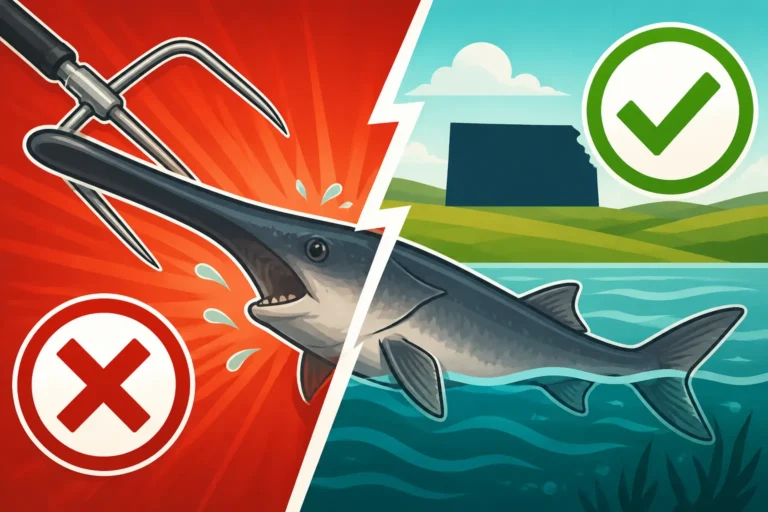
Paddlefish, often called "spoonbill," are ancient and unique fish primarily found in the larger river systems like the Neosho and Marias des Cygnes rivers. They are filter feeders, which means they cannot be caught with traditional hook and bait methods. Instead, they are caught through snagging, a technique that is only permitted during a very specific and short paddlefish snagging season. This season typically occurs in the spring, usually in March and April, and is restricted to certain stretches of river. Anglers are allowed to keep a limited number of paddlefish, often one per day, and there are specific length limits (e.g., minimum 30 inches eye to fork of tail) to protect smaller fish. The season length and exact regulations can change annually, so checking the KDWP’s current regulations is absolutely vital. Our Kansas Paddlefish Snagging Season Dates provides a deeper look into this unique fishery. Because these fish are so unusual and long-lived, their management requires precise and restrictive rules to ensure their continued presence in Kansas waters.
Regional and Waterbody-Specific Regulations
The beauty of Kansas fishing lies in its diversity, but this also means that regulations aren't always uniform across the entire state. What's perfectly legal at Milford Lake might be a violation at a small community pond just a few miles away. The Kansas Department of Wildlife and Parks often implements specific rules tailored to individual water bodies or types of fishing environments to address local ecological conditions, angler pressure, or species management goals. Ignoring these localized rules is one of the quickest ways to find yourself in hot water with a game warden.
Reservoir-Specific Length and Creel Adjustments
Kansas boasts an impressive network of large reservoirs, each with its own unique characteristics and fisheries. To optimize fish populations and angling experiences, KDWP biologists frequently apply special length and creel limits to these individual lakes that deviate from the statewide rules. This is particularly common for highly sought-after species like walleye, crappie, and bass.
For example, while the statewide walleye minimum length is 21 inches, a specific reservoir might implement a protected slot limit. This means fish within a certain size range—say, between 18 and 24 inches—must be released, while only fish under 18 inches or over 24 inches can be kept. The purpose of these slots is often to protect the prime breeding stock, allowing them to grow larger and contribute to future generations, while still allowing for some harvest of smaller or very large, older fish. Conversely, some lakes might have a more liberal size limit if their fish populations are booming and need more harvest pressure.
Crappie limits, while generally generous, can also be adjusted at the reservoir level. A lake experiencing heavy fishing pressure or slow-growing crappie might have a reduced daily limit of 20 or 25 fish, or a slightly higher minimum length limit than the typical 10 inches. It's truly a localized management strategy. The absolute best way to stay informed is to grab a physical copy of the KDWP Fishing Regulations Summary or download the latest version from their website before heading out. This critical step can save you from an accidental violation and is highlighted in our Where to Find the Kansas Fishing Regulations Summary guide. Trust me, a few minutes of research before you hit the water is always time well spent.
Community Fishing Lakes and Urban Park Ponds
Community Fishing Lakes (CFLs) and urban park ponds are fantastic resources, especially for families and anglers who don't have access to larger boats or distant reservoirs. These waters are often heavily stocked and conveniently located near population centers. However, precisely because they are so accessible and experience high angler pressure, they frequently come with their own set of stricter, often simplified, regulations.
You'll commonly find reduced daily creel limits on CFLs for many species. For instance, while the statewide crappie limit might be 50, a CFL could reduce it to 10 or 15 fish per day. Bass often have stricter length limits or are managed under a "catch-and-release only" rule to ensure a consistent population. Some ponds might also have "two pole and line" limits, restricting how many rods an angler can use at one time, or even artificial lure-only rules to reduce incidental catch-and-release mortality.
These tighter rules are designed to spread the harvest among more anglers and ensure that the stocked fish last longer, providing continuous fishing enjoyment. It's a way for KDWP to manage these highly visible and important local fisheries sustainably. If you're planning a trip to one of these spots, always look for signage at the lake's entrance or consult the KDWP regulations specific to that particular community lake. Our Kansas Community Fishing Lake Rules article goes into more detail about what to expect at these popular local spots.
Rivers and Streams: Unique Challenges and Rules
Fishing in Kansas's rivers and streams presents a different set of challenges and, consequently, a different regulatory landscape compared to impoundments. Rivers like the Kansas River, the Republican, and the Neosho are dynamic, flowing systems, and the species that inhabit them, particularly large catfish and paddlefish, require specific management.
One of the most notable differences in river fishing is the prevalence of alternative fishing methods. Techniques like trotlining and jug fishing are popular for catching catfish in larger rivers. These methods involve setting multiple hooks along a main line or on individual floats. While legal in many river systems, they are strictly prohibited in most lakes and reservoirs. Even where permitted, there are explicit rules regarding the number of hooks, the length of the lines, and marking requirements for unattended gear. Our guide on Kansas Trotline and Jug Fishing Rules provides a comprehensive overview of these unique regulations.
Furthermore, river systems are where you’ll find the highly specialized paddlefish snagging season and its associated rules, as discussed earlier. Certain river stretches might also have unique seasonal closures for specific species or restrictions on bait use. The flowing nature of rivers means fish move more freely and habitats can change with water levels, necessitating adaptive management strategies. If you're venturing out to fish a Kansas river, especially for the first time, it's crucial to consult the KDWP regulations for that specific river system. Conditions and rules for river fishing can vary significantly, so staying informed is key to a successful and legal outing, as you'll discover in our Kansas River Fishing Guide.
Understanding Possession Limits and Transporting Fish
So, you've had a fantastic day on the water and filled your cooler with a legal daily limit of fish. That's great! But the rules don't stop once your rod is put away. There are important regulations regarding how many fish you can possess after you leave the water and how you must transport them. These rules are designed to prevent overharvesting disguised as multiple daily limits and to aid game wardens in identifying your catch.
Daily Creel vs. Possession Limit Explained
This is a point of common confusion for many anglers, especially those on multi-day fishing trips or when fishing with multiple people. Your daily creel limit is the maximum number of fish of a particular species you can harvest in a single calendar day (from midnight to midnight). For example, if the walleye daily limit is two, you can only catch and keep two walleye between 12:00 AM and 11:59 PM on any given day.
The possession limit, on the other hand, is the maximum number of fish you can legally have in your possession at any given time, regardless of when they were caught. This typically applies to fish stored at your home, cabin, or in transit. In Kansas, for most species, the possession limit is twice the daily creel limit. So, if the daily walleye limit is two, your possession limit would be four. This means if you fish for two days and catch two walleye each day, you can have a total of four walleye in your freezer or cooler at your lodging.
However, there's a critical caveat: the possession limit usually does not allow you to possess more than one daily creel limit while actively engaged in fishing. So, if you're on the lake, and you've already kept two walleye for the day, you cannot have two more walleye from a previous day stored in your boat's cooler. Once you reach your daily limit, you're done fishing for that species for the day. This distinction is vital for preventing abuse of the system and ensuring that anglers aren't exceeding their daily take. Always double-check the KDWP regulations, as some species or specific water bodies may have different possession limit rules.
Transporting Your Catch Legally
You've successfully caught your fish, adhered to the daily creel limits, and are now ready to head home. But before you just toss them in a bag or fillet them all immediately, know that there are specific regulations in Kansas for transporting your catch. These rules are in place to allow KDWP law enforcement officers to easily identify your fish, confirm their species, and ensure they meet any length limits, which is crucial for upholding fishing laws and preventing violations, as detailed in our Kansas Fishing Law Enforcement and Penalties guide.
The most important rule for transporting fish in Kansas is that if you have filleted your fish, you must leave a patch of skin, at least one inch square, on each fillet. This patch of skin, with its distinctive coloration or scales, allows a game warden to identify the species of fish. Without this identifying patch, it can be impossible to tell if you have, say, a legal walleye fillet or an illegal saugeye fillet, or if a crappie fillet came from a fish of legal length. For catfish, the identifying characteristic is usually the head or a portion of the skin. If you're transporting whole fish, this isn't an issue, but for filleted fish, this small patch of skin is non-negotiable.
When preparing your fish for transport, ensure they are kept cool and fresh, especially during warmer months. Using a quality cooler packed with ice is essential. You can find durable coolers from various brands available on Amazon that are perfect for keeping your catch in prime condition for the journey home. Beyond the legal aspect, proper care during transport also ensures your fish tastes its best. Remember, the goal is always ethical harvesting: only keep what you will eat, respect the limits, and ensure your catch is legally identifiable until it's ready for the cooking pan.
The Importance of the Kansas Fishing License
For most adult anglers, a Kansas fishing license isn't just a suggestion; it's a legal requirement. It's the key that unlocks all the fantastic fishing opportunities across the state, from our massive reservoirs to our quaint community ponds. While the cost might sometimes feel like an added expense, understanding why that license is necessary, and what it contributes to, can change your perspective from a chore to an investment in our shared natural resources.
Why a License is Non-Negotiable
If you are a Kansas resident between the ages of 16 and 64, or a nonresident aged 16 and older, you are legally required to possess a valid Kansas fishing license to fish in public waters. There's no getting around this. Trying to fish without one can lead to fines and penalties, and it's simply not worth the risk. A game warden can and will check for your license, and ignorance of the law is not considered a valid excuse. Our Kansas Fishing Law Enforcement and Penalties provides a sobering look at the consequences of fishing without a license.
Beyond the legal mandate, there's a deeper reason why your fishing license is so crucial. Every dollar spent on a Kansas fishing license goes directly back into managing and improving the state's fisheries. This includes:
- Fish Stocking Programs: KDWP annually stocks millions of fish, including walleye, crappie, catfish, and trout, into Kansas waters. These programs ensure healthy populations and provide diverse angling opportunities.
- Habitat Improvement: License fees fund projects that enhance aquatic habitats, such as building artificial brush piles for crappie, improving spawning areas, and controlling aquatic vegetation.
- Research and Management: Biologists continuously monitor fish populations, conduct research, and adapt regulations to ensure sustainable fishing for all species.
- Access and Infrastructure: Funds also support the maintenance of boat ramps, fishing piers, and public access points, making it easier for you to get out and fish.
In essence, your fishing license is an investment in the future of Kansas fishing. It's how we collectively ensure that the sport we love continues to thrive, providing enjoyment for generations to come. You can explore the various options and costs in our Kansas Fishing License Cost by Type guide.
Exemptions and Special Permits (Trout, etc.)
While the general rule is that most adult anglers need a license, Kansas does offer some common-sense exemptions and also requires special permits for certain types of fishing. It's important to know if you fall under an exemption or if you need to add an extra permit to your fishing arsenal.
The most common exemptions include:
- Youth: Residents 15 years old and younger do not need a fishing license. This is a fantastic initiative to get kids hooked on fishing early! For nonresidents, youth under 16 years old are also exempt. You can find more details in Do Kids Need a Fishing License in Kansas?.
- Seniors: Kansas residents 65 years of age or older are also exempt from needing a general fishing license. This is a wonderful way to acknowledge and support our senior angling community. Read more about this in Kansas Senior Fishing License Discounts.
- Landowners: Residents fishing on their own land are typically exempt, provided the water is entirely private and not publicly stocked. However, if the water body has public access or is stocked by KDWP, a license might still be required.
- Disabled Veterans: Certain disabled veterans may also qualify for a free fishing license.
- Free Fishing Days: KDWP designates specific "Free Fishing Days" each year, typically in June, during which residents and nonresidents can fish without a license.
In addition to the general fishing license, specific activities or species require an additional permit. The most common is the Kansas Trout Permit. As discussed earlier, if you plan to fish for trout during the designated winter trout season in stocked waters, you'll need this permit in addition to your regular fishing license (unless you are otherwise exempt from the general license). This ensures dedicated funding for the put-and-take trout program. You can find comprehensive information on these additional requirements in our Kansas Trout Permit Guide. Always remember, even if you're exempt from a license, all other fishing regulations regarding seasons, limits, and legal methods still apply.
Here’s a quick overview of common statewide regulations for popular species:
| Species | Daily Creel Limit | Minimum Length Limit | Possession Limit (General) | Notes |
|---|---|---|---|---|
| Walleye / Saugeye | 2 | 21 inches | 4 | Check specific reservoir regulations for slot limits |
| White Crappie / Black Crappie | 50 | 10 inches | 100 | Check specific lake regulations for variations |
| Channel Catfish | 10 | None | 20 | |
| Blue Catfish | 5 | None | 10 | Aggregate with flathead in some waters; check KDWP rules |
| Flathead Catfish | 5 | None | 10 | Aggregate with blue in some waters; check KDWP rules |
| White Bass | 25 | None | 50 | Excellent for numbers during runs |
| Wiper / Striped Bass | 2 | 15 inches | 4 | |
| Largemouth Bass | 5 | 13 inches | 10 | Check specific lake regulations |
| Smallmouth Bass | 5 | 13 inches | 10 | Check specific lake regulations |
| Spotted Bass | 5 | 13 inches | 10 | Check specific lake regulations |
| Bluegill / Sunfish | No Limit | None | No Limit | Check CFLs for potential reduced limits |
| Rainbow / Golden Trout | 5 | None | 10 | Requires Trout Permit; Dec 1 – Mar 31 Season |
| Paddlefish | 1 | 30 inches | 2 | Snagging only; short, specific season & locations |
Please remember this table is a general guide. Always consult the most current official Kansas Fishing Regulations Summary for the specific body of water you intend to fish, as rules are subject to change and local exceptions are common.
Disclaimer
The information provided in this guide is intended for general informational purposes only and does not constitute legal advice. While we strive to provide accurate and up-to-date information, fishing regulations in Kansas are subject to change at any time by the Kansas Department of Wildlife and Parks (KDWP). It is the sole responsibility of every angler to consult the official KDWP Fishing Regulations Summary or website for the most current and specific rules pertaining to the species, water body, and time of year they are fishing. Failure to do so may result in fines or penalties. Always fish responsibly and legally.