Best Rod Length for Bank Fishing
There's nothing quite like the peace of bank fishing in Kansas, standing on solid ground, casting your line out into a promising stretch of water. But if you've ever found yourself struggling to reach that sweet spot in a reservoir, constantly snagging your line in bankside brush, or feeling like your rod just isn't quite right for the fish you're targeting, you know the frustration. This guide is all about helping you navigate the sometimes-overwhelming world of fishing rods to pick the perfect length for your bank fishing adventures, making your next outing more enjoyable and, hopefully, more successful.
The Universal Challenge of Bank Fishing: Why Rod Length Is Key
Bank fishing offers a wonderful connection to nature, but it comes with its own unique set of challenges compared to fishing from a boat. You're limited by how far you can cast, you often have to contend with shore obstacles, and you need a rod that can handle whatever situation presents itself. The length of your fishing rod isn't just a number; it's a critical factor that dictates your casting ability, your control over the lure, and your effectiveness in landing fish from shore.
Casting Further from Shore
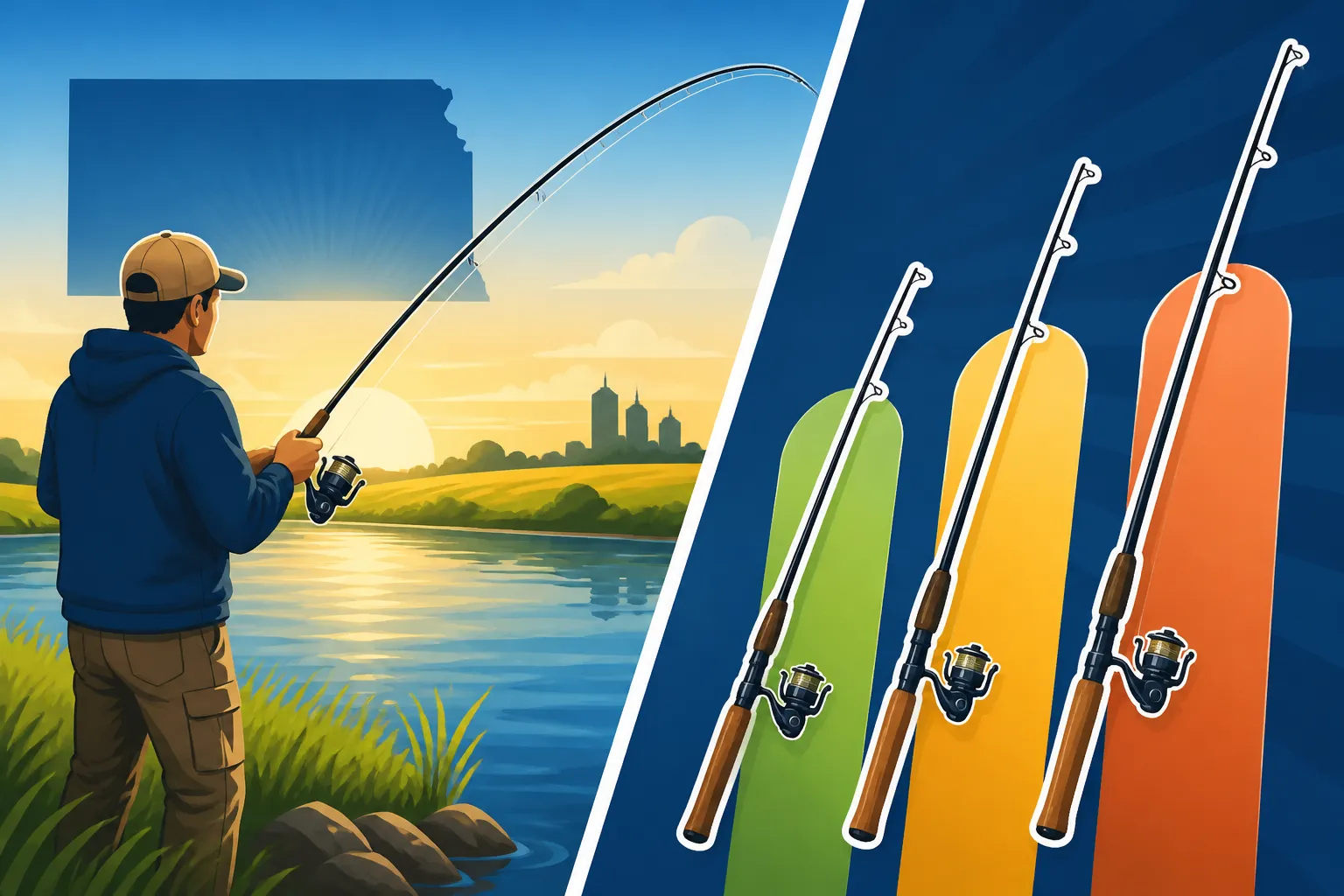
One of the most common frustrations for bank anglers is the inability to reach fish holding in deeper water or further away from the bank. Imagine standing on the shore of Milford Lake Fishing Guide, watching fish break the surface just out of your casting range. It's a gut punch, right? Longer rods, generally those in the 7 to 9-foot range, excel at generating greater casting distance. Think of it like a lever; a longer rod provides more leverage, allowing you to whip your lure or bait further with less effort. This extra distance can make all the difference, putting your bait in front of fish that shorter rods simply can't reach. It's particularly useful when targeting species like walleye or white bass that might school up in open water, just beyond the reach of standard 6-foot rods.
Navigating Obstacles
While longer rods are great for casting distance, they can become a real headache when you're fishing banks lined with trees, overhanging branches, or thick brush. There's nothing worse than getting your perfectly tied rig tangled in an oak tree on your backcast, especially when you're just getting into a rhythm. Shorter rods, typically 5 to 6.5 feet, offer superior maneuverability in tight spaces. If you're exploring the smaller, more intimate nooks and crannies of a Kansas Community Lake Rules or a brushy stream bank, a shorter rod allows for precise, underhand, or sidearm casts that keep your line clear of snags. It’s a trade-off, of course – you lose some casting distance, but you gain the ability to fish areas that would be impossible with a longer pole.
Handling Different Fish Fights
The fight with a fish from the bank is often different from a boat. You can't just chase after a big channel catfish or a hard-fighting wiper if it decides to make a run for a brush pile. Rod length influences how you manage a fish during the fight. A longer rod can act as a shock absorber, helping to cushion powerful runs and prevent hooks from pulling out, especially with lighter lines. This is particularly beneficial when a large fish, like a trophy blue catfish from the Kansas River Catfish Spots, tries to dig into submerged structure. The length gives you a bit more forgiveness. Conversely, a shorter rod can offer more immediate control and leverage to quickly turn a fish away from cover, which can be crucial in tight quarters. Understanding this dynamic is key to picking a rod that matches both your fishing environment and your target species.
Matching Rod Length to Kansas Bank Fishing Scenarios
Kansas offers a diverse array of fishing environments, from vast reservoirs to winding rivers and countless farm ponds. The "best" rod length for bank fishing isn't a one-size-fits-all answer; it truly depends on where you're casting your line.
Large Reservoirs
When you're standing on the expansive shores of Wilson Lake Fishing Guide or Cheney Reservoir Fishing Guide, often facing wide-open water with minimal bankside cover, your primary goal is typically distance. These big waters often mean fish are spread out or holding offshore, and you need to reach them. For these scenarios, a longer spinning rod, generally 7 to 9 feet, is an excellent choice. It allows you to sling baits like crankbaits, spoons, or heavier bottom rigs far out into the reservoir, covering more water and increasing your chances of finding fish. You'll appreciate that extra reach when a school of white bass or wipers starts busting bait just beyond what a shorter rod could manage.
Rivers
Fishing the banks of Kansas rivers like the Kansas River or the Republican River presents a different set of challenges. Riverbanks can be varied – some stretches might be wide open, while others are choked with trees, logjams, and steep banks. For river fishing, a versatile rod length, often in the 6.5 to 7.5-foot range, can be ideal. This gives you enough length for decent casting distance in open areas but also enough control to navigate around obstacles and make accurate casts into eddies or current seams near cover. If you're primarily targeting channel catfish with cut bait on the bottom, a medium-heavy rod around 7 feet can offer the backbone to handle current and bigger fish, while still being manageable from shore. Consider a visit to Republican River Fishing Access with a rod that offers a good balance.
Smaller Ponds and Community Lakes
Kansas is dotted with numerous smaller public ponds, private farm ponds, and Kansas Community Lake Rules that offer fantastic fishing opportunities, especially for families and beginners. These spots often have more accessible banks, but they can also be surrounded by trees, docks, or other structures. For these environments, a shorter to medium-length rod, between 6 and 7 feet, is generally more appropriate. The compact size makes it easier for kids to handle, and it allows for more accurate casting into tight pockets of water or along weed lines without getting hung up. You don't usually need extreme casting distance here, as the fish are often closer to shore or structure. This length is perfect for targeting bluegill, crappie, or even bass with lighter lures or live bait.
Brushy or Heavily Vegetated Banks
Ah, the glorious yet frustrating brush pile. We all know that fish love cover, but fishing it from the bank can be a nightmare if your rod is too long. When dealing with heavily vegetated areas, like those found on some stretches of El Dorado Lake Bass Fishing or smaller creeks, a shorter rod, perhaps 5 to 6.5 feet, becomes your best friend. This compact length allows for precise flicking casts, pitching, or short roll casts that get your lure exactly where you want it – often right into a small opening in the cover. While you sacrifice distance, the ability to avoid snags and present your bait accurately close to fish-holding structure is paramount. It's about surgical precision rather than brute force.
Considering Species and Techniques for Your Rod Choice
Beyond the fishing environment, the type of fish you're after and how you plan to catch them will heavily influence the ideal rod length for your bank fishing setup.
Catfish, Walleye, and Crappie
Different species demand different approaches, and rod length is part of that equation.
- Catfish: For big channel cats, blue cats, or flatheads, especially when you're soaking cut bait or stink bait from the bank, a longer rod (7 to 9 feet) with a medium-heavy to heavy power is often preferred. This length allows for long casts with heavy weights, provides leverage to fight powerful fish, and keeps more line out of the water, which can be helpful in current. Imagine hooking into a big flathead on the Kansas River Blue Catfish Spots – you'll want that length and backbone. Many anglers find their ideal catfish rod in the 7.5-foot range.
- Walleye: When targeting walleye from the bank, whether you're tossing crankbaits on Milford Lake Walleye Fishing Near the Dam or jigging soft plastics, casting distance is often a priority. A 7 to 7.5-foot medium-light to medium power spinning rod is a popular choice. This length helps achieve those long casts needed to cover expansive flats or points, and the moderate action is excellent for detecting subtle walleye bites and setting the hook effectively.
- Crappie: Crappie fishing from the bank can vary widely. If you're casting small jigs or minnows under a float in open water, a 6.5 to 7-foot light to medium-light spinning rod offers good casting distance for light baits. However, if you're targeting crappie tight to submerged brush or timber, a slightly shorter (6 to 6.5 feet) rod can offer better precision. For spider rigging or holding multiple lines, some dedicated crappie anglers even use specialized long poles that are 10 feet or more, though these are less common for active casting. Learn more about Kansas Crappie Length and Bag Limits before you head out.
Bass and Panfish
These species often require different tactics and therefore different rod lengths.
- Largemouth and Smallmouth Bass: Bass anglers tend to be very particular about their rod choices. For general bank fishing, a 6.5 to 7.5-foot medium-heavy fast action rod is a fantastic all-around choice. This length provides a good balance of casting distance for covering water and accuracy for pitching into cover. If you're frequently fishing topwater or open-water spinnerbaits, the longer end of that spectrum might be better. If you're flipping jigs into dense cover, a slightly shorter, more powerful rod gives you more leverage and control to extract a fish quickly. For exploring El Dorado Lake Largemouth Bass Spots, having a versatile length is key.
- Panfish (Bluegill, Sunfish, etc.): For bluegill, redear sunfish, and other panfish, finesse is often the name of the game. A lighter, shorter rod, typically 5.5 to 6.5 feet, with a light or ultra-light power is ideal. These rods are sensitive enough to detect the subtle bites of panfish and provide an incredibly fun fight on light tackle. Paired with small jigs or live worms, this setup is perfect for relaxed afternoons on Best Bluegill Ponds in Kansas.
Spinning vs. Baitcasting Setups
The type of reel you use also interacts with rod length.
- Spinning Rods: Spinning setups are often preferred for bank fishing due to their ease of use and ability to cast lighter lures great distances. Longer spinning rods (7 to 9 feet) are common for maximum casting reach, especially with lighter lines and baits. This combination is forgiving for beginners and excellent for general-purpose bank fishing across various Kansas waters. You can find a huge selection of these at retailers like Bass Pro Shops or online at Amazon.
- Baitcasting Rods: Baitcasting reels offer greater accuracy, power, and line capacity, making them popular for heavier lures and larger fish. While many baitcasting rods are in the 6.5 to 7.5-foot range, longer models (up to 8 feet) are available for specialized techniques like punching heavy cover or throwing large swimbaits, where extra leverage and casting distance are beneficial. However, the learning curve for baitcasters is steeper, and they can be more challenging to use in brushy bank fishing conditions due to the need for more open backcasting room.
Beyond Length: Other Rod Features for Kansas Bank Anglers
While rod length is crucial, it's just one piece of the puzzle. Other characteristics like power, action, and material also play significant roles in how a rod performs for bank fishing.
Rod Power and Action
- Power: This refers to the strength of the rod – how much force it takes to bend the blank. For bank fishing, matching power to your target species is vital. A "light" power rod is great for panfish and smaller trout, offering sensitivity and a lively fight. A "medium" power rod is a versatile choice for bass, crappie, and smaller catfish. For larger catfish or throwing heavy lures on big reservoirs, "medium-heavy" or "heavy" power provides the backbone needed to cast effectively and muscle fish away from cover. Fishing without enough power can quickly lead to broken lines or lost fish, especially when a big one decides to run for a snag.
- Action: This describes where the rod bends when pressure is applied. "Fast action" rods bend mostly at the tip, offering excellent sensitivity for detecting subtle bites and quick hook sets, which is great for walleye or jigging. "Moderate" or "slow action" rods bend further down the blank, providing a more parabolic bend that helps absorb shock during a fight, making them ideal for casting reaction baits like crankbaits or for fighting hard-pulling fish like striped bass, preventing hooks from tearing out. A good all-around bank fishing rod often falls into the medium-fast action category, offering a good balance.
Material and Durability
Most fishing rods are made from graphite, fiberglass, or a composite blend.
- Graphite Rods: These are generally lighter, more sensitive, and offer faster actions. They transmit vibrations better, allowing you to feel subtle bites and detect changes in bottom composition. This sensitivity is a huge advantage when bank fishing for finicky species like walleye or when fishing with lighter presentations. However, graphite can be more brittle and susceptible to breakage if mishandled, which is a consideration when navigating rocky or brushy banks.
- Fiberglass Rods: Fiberglass rods are typically more durable, heavier, and offer a slower, more forgiving action. They're excellent for techniques where a softer, more parabolic bend is desired, such as throwing crankbaits or when durability is a primary concern. They can withstand more abuse, making them a good option for rough-and-tumble bank fishing where your rod might get bumped around.
- Composite Rods: These blend the best features of graphite and fiberglass, often providing a good balance of sensitivity, durability, and action. Many modern rods use composite materials to achieve specific performance characteristics. When browsing fishing gear online or in stores like Bass Pro Shops, you'll find a wide range of options to suit any budget or fishing style.
Transport and Storage Considerations
Don't forget the practicalities of a longer rod when you're on the move. Getting a 9-foot rod into a compact car can be a challenge. Two-piece or even multi-piece rods are fantastic for bank anglers, as they break down into more manageable sections for transport and storage, without significantly compromising performance. If you're hiking into a secluded spot or simply have limited vehicle space, a multi-piece rod is a game-changer. Ensure your chosen rod length fits your lifestyle and transportation needs, especially if you're planning a trip to a far-off Kansas State Fishing Lakes Guide.
Here’s a quick overview to help you choose:
| Kansas Bank Fishing Scenario | Recommended Rod Length Range | Typical Power/Action | Common Target Species | Key Benefit of Length |
|---|---|---|---|---|
| Large Reservoirs (Open Banks) | 7.5 – 9 feet | Medium-Heavy / Fast | Walleye, White Bass, Stripers, Catfish | Maximum Casting Distance, Line Control |
| Rivers (Varied Banks) | 6.5 – 7.5 feet | Medium / Moderate-Fast | Catfish, Bass, Drum, Crappie | Versatility, Balance of Cast & Control |
| Small Ponds / Community Lakes | 6 – 7 feet | Light-Medium / Moderate | Panfish, Bass, Crappie | Accuracy, Manageability, Fun Fight |
| Brushy / Vegetated Banks | 5 – 6.5 feet | Medium-Light / Fast | Bass, Crappie, Panfish | Precision Casting, Snag Avoidance |
| Dedicated Catfishing (Heavy Tackle) | 8 – 9+ feet | Heavy / Moderate-Fast | Trophy Catfish | Leverage, Distance for Heavy Rigs |
Ultimately, the best rod length for bank fishing in Kansas is a personal choice that balances the specific demands of your chosen fishing spot, your target species, and your preferred techniques. Don't be afraid to experiment, and remember that having a couple of different rods for varying conditions can make you a much more versatile and successful bank angler. You can find a huge variety of options, read reviews, and compare features for different rod lengths online at Amazon or by visiting a local Bass Pro Shops.
Disclaimer
This article is for general informational purposes only and does not constitute professional advice. Laws, prices and regulations vary by location and change over time. Consult a qualified professional for guidance on your specific situation.