Best Jon Boat for Kansas Rivers
Navigating the winding, often shallow and occasionally unpredictable waters of Kansas rivers can be a real challenge for anglers. While lakes offer vast expanses, rivers present a unique set of conditions that can leave many boaters scratching their heads, or worse, stuck on a sandbar. This guide is all about helping you find the perfect companion for these adventures: the humble yet incredibly effective jon boat, designed to conquer the nuanced demands of river fishing and make your time on the water more productive and enjoyable.
Why a Jon Boat for Kansas Rivers?
When you think of Kansas fishing, your mind might first drift to the expansive reservoirs like Milford Lake or Cheney Reservoir. But our rivers, from the mighty Kansas River to smaller, more intimate flows, hold incredible fishing opportunities, especially for species like catfish, bass, and crappie. However, these aren't always easy waters to navigate, and that's where the jon boat shines.
Navigating Shallow and Obstacle-Filled Waters
Let's face it, Kansas rivers aren't exactly known for their deep, wide channels everywhere you go. Head out on the Kansas River, also known as the Kaw, or even the Republican River, and you'll quickly discover stretches that can be incredibly shallow, particularly during late summer or fall when water levels drop. A traditional V-hull bass boat or even some smaller utility boats might draw too much water, leaving you high and dry on a hidden sandbar or grinding your propeller through the muck.
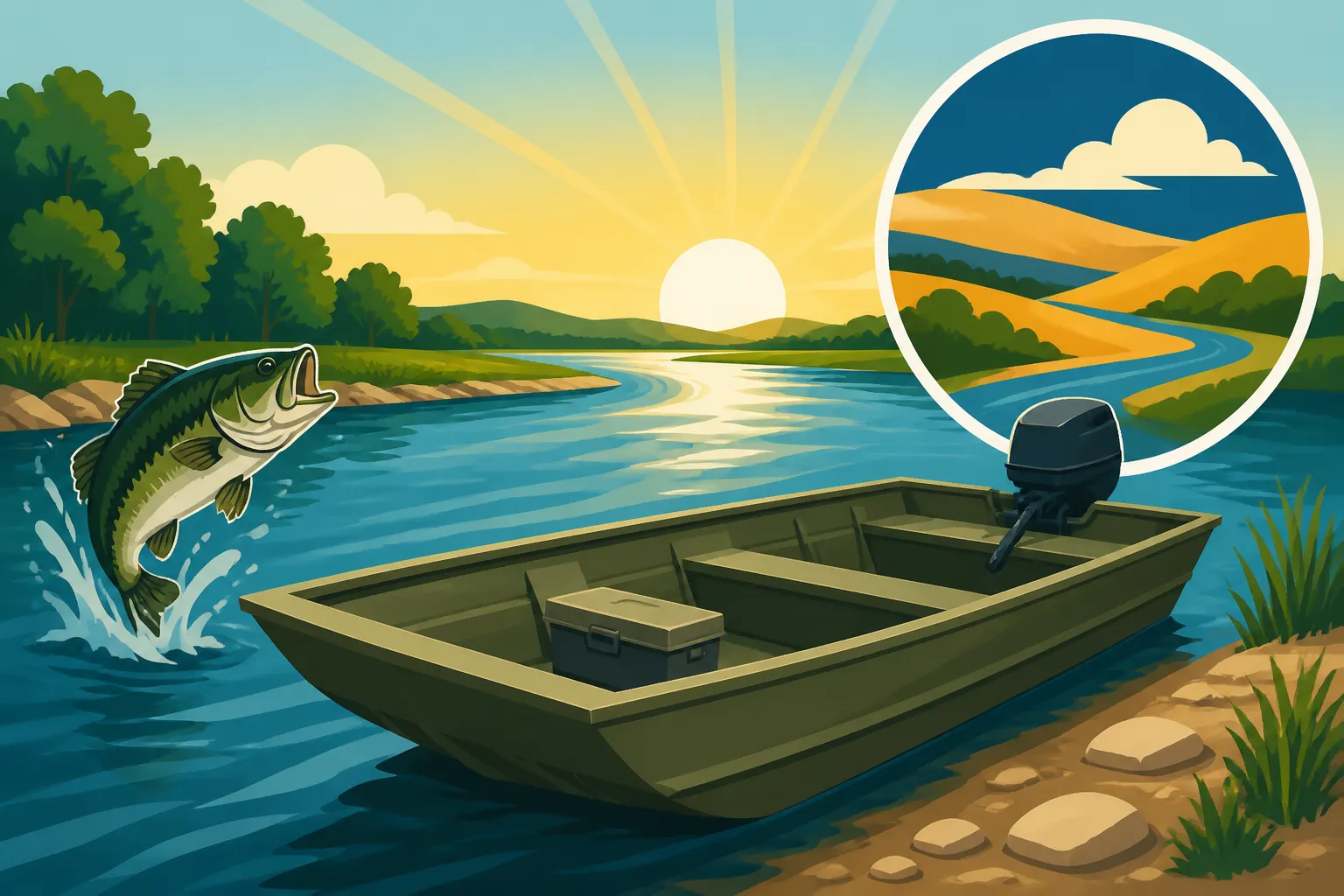
This is precisely where the jon boat's design becomes your best friend. With its characteristically flat or modified-V bottom, a jon boat is engineered to float in minimal water, allowing you to access those skinny water honey holes that deeper draft boats simply can't reach. Imagine slowly motoring into a secluded oxbow where big flathead catfish are lurking, or reaching a quiet backwater where crappie are stacked – that's the kind of access a jon boat provides. Furthermore, Kansas rivers often carry debris, from submerged logs to scattered rocks, especially after heavy rains. An aluminum jon boat, known for its rugged construction, can take these bumps and scrapes far better than a delicate fiberglass hull, shrugging off impacts that might sideline another vessel. It's a true workhorse, built for the realities of river exploration. You'll find yourself confidently exploring areas perfect for Kansas River Catfish Spots or seeking out the deep bends where you might find Kansas River Blue Catfish Spots without constantly worrying about grounding.
Portability and Launching Ease
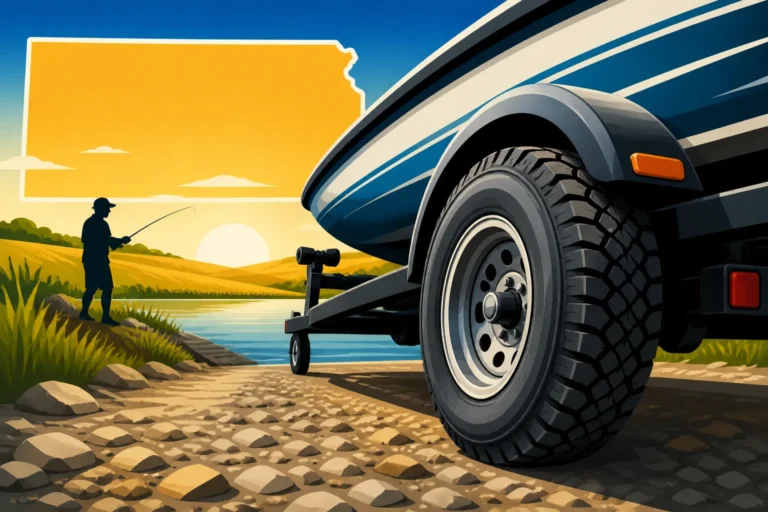
Another significant advantage of jon boats, especially for river fishing, is their exceptional portability and ease of launching. Unlike the expansive concrete ramps you might find at large reservoirs, many river access points are far more rudimentary. Think gravel banks, muddy slopes, or small, unimproved areas tucked away under a bridge. Trying to launch a heavy, large boat from such spots can be a real headache, requiring specialized equipment or a significant amount of effort.
Jon boats, being relatively lightweight and often smaller in stature, make this process a breeze. A 14 to 16-foot aluminum jon boat can often be launched and retrieved by just one or two people, even from challenging shorelines. This means less time struggling at the ramp and more time actually fishing. It also encourages spontaneity; you can decide to hit a promising stretch of river on a whim without needing to coordinate a major operation. This easy launch capability opens up a whole new world of accessible fishing, allowing you to explore numerous spots up and down a river system. While it's a different scenario, the challenges of varying access points are similar to navigating Public Boat Ramps at Milford Lake, where knowing your boat's capabilities for different types of ramps is key.
Versatility for Different River Conditions
Kansas rivers are dynamic environments. One stretch might be a wide, slow-moving pool, perfect for drifting or casting to structure. Another might narrow, picking up speed as it flows over riffles or through tighter bends. A good jon boat offers the versatility to handle this range of conditions, making it an ideal choice for the multi-faceted river angler.
Their inherent stability, particularly with a wider beam, makes them a comfortable platform for standing and casting, whether you're targeting bass along a submerged tree line or jigging for walleye in deeper pools. The open interior design typically found in jon boats also means you have a flexible space to arrange your gear, add specialized seating, or set up for different fishing techniques. Beyond just fishing, a jon boat is a utility player. It can serve as a dependable platform for waterfowl hunting in the fall, a trusty vessel for hauling gear, or simply a stable craft for exploring new river sections with family. This adaptability ensures your investment pays off across various outdoor pursuits. Whether you're navigating the bustling sections near Kansas River Fishing Access Points Near Lawrence or the more tranquil stretches further west near Kansas River Fishing Access Points Near Manhattan, a jon boat offers the flexibility to adapt to whatever the river throws at you.
Key Features to Look for in a Kansas River Jon Boat
Choosing the right jon boat isn't just about picking the first aluminum boat you see. For the unique demands of Kansas rivers, certain features become paramount. Paying attention to these details will ensure your boat is not just functional, but truly excels in these environments.
Size and Material Considerations
The size of your jon boat is a delicate balance. For Kansas rivers, where you'll encounter varying widths, depths, and currents, a 14 to 16-foot boat often hits the sweet spot. A boat in this range is typically nimble enough to navigate tighter bends and smaller channels, yet large enough to provide a stable fishing platform for one or two anglers and their gear. Go too much larger, and you might struggle with maneuverability in narrower sections or at unimproved launch sites. Go too small, and you sacrifice stability, especially if you plan to stand and cast, or if you encounter unexpected currents or boat wakes.
When it comes to material, there's really only one choice for river use: aluminum. Fiberglass, while beautiful and often offering a smoother ride in choppy lake conditions, is simply too fragile for the potential impacts you'll encounter on a river. Aluminum is lightweight, incredibly durable, and highly resistant to punctures and dings from rocks, logs, and other submerged obstacles. But not all aluminum is created equal. Look for a boat constructed from a thicker gauge aluminum, often referred to as marine-grade aluminum, typically .100 or .125 gauge. This thicker material provides superior rigidity and impact resistance, ensuring your boat can withstand the occasional bump without catastrophic damage. It’s a testament to its robust nature, built to handle the rough-and-tumble reality of river fishing. Consider the same principles when looking for a Best Boat Size for Small Ponds; you want something that's manageable but provides enough space and stability for your intended use.
Hull Design and Transom
The specific hull design of a jon boat will significantly influence its performance on the river. You'll generally find two main types: true flat-bottom boats and modified-V hulls. A true flat-bottom jon boat offers the absolute shallowest draft and maximum stability at rest. If you're primarily fishing very skinny water, wading from the boat, or standing to cast in calm conditions, this design is hard to beat. However, the trade-off is often a rougher ride when encountering any chop or boat wakes, as the flat bottom tends to pound against the water.
A modified-V hull, on the other hand, incorporates a slight V-shape towards the bow that gradually flattens out towards the stern. This design offers a compromise: it still provides excellent shallow-water capability and good stability, but the V-front helps cut through waves, providing a noticeably smoother and drier ride in light chop or when running through wakes. It also tends to track better in current. For many Kansas rivers, which can have varying conditions, a modified-V might offer the best all-around performance and comfort. Equally important is the transom, the flat surface at the back of the boat where your outboard motor mounts. A strong, reinforced transom is crucial to securely hold your motor and effectively transfer its thrust to the boat. Ensure the transom height matches the shaft length of your intended outboard motor (typically a 15-inch short shaft for most jon boats, though some larger models may accommodate a 20-inch long shaft). A weak or improperly designed transom can lead to serious performance and safety issues down the line.
Interior Layout and Storage
One of the beauties of a jon boat is its typically open, no-frills interior layout. This design philosophy offers a blank canvas for customization, allowing you to tailor the boat precisely to your river fishing needs. Most jon boats come with simple bench seats, which are functional but can be upgraded for comfort. Look for models that offer optional or easily installable casting decks at the bow and/or stern. These elevated platforms provide an excellent vantage point for spotting fish or submerged structure, and they can also house additional storage compartments underneath.
Speaking of storage, while many jon boats are open, some will feature built-in storage boxes or compartments under the bench seats or casting decks. These are invaluable for keeping essential gear dry, organized, and secure from the elements or accidental splashes. For river anglers, a built-in or easily added livewell is often a critical feature. Whether you're keeping bait lively or storing your catch for the ride home, a circulating livewell ensures your fish remain healthy. If a boat doesn't come with one, consider the feasibility and space for an aftermarket portable livewell, which can be picked up at retailers like Bass Pro Shops or found through online searches. An open layout ultimately gives you the freedom to set up your boat exactly how you need it for a successful day of fishing.
Powering Your Kansas River Jon Boat
The engine choice for your jon boat is as critical as the boat itself, especially when dealing with river currents. A well-matched motor ensures you can navigate effectively, cover water efficiently, and get home safely, even if conditions change.
Outboard Motor Selection
Choosing the right outboard motor for your Kansas river jon boat involves a few key considerations. First, horsepower: you need enough power to push your boat against the current, especially on larger rivers or when carrying a full load of gear and passengers. For a typical 14-16 foot jon boat, motors ranging from 9.9hp to 25hp are very common. Larger jon boats, particularly those with wider beams or more robust construction, might handle up to 40hp or even 50hp. It’s crucial to match the motor's horsepower to the boat's maximum rated capacity, which is usually found on the boat's capacity plate. Overpowering a boat is not only dangerous but illegal.
Secondly, shaft length is non-negotiable. Most jon boats, with their low freeboard and shallow transoms, require a short-shaft (15-inch) outboard motor. Using a long-shaft motor on a short-shaft transom will result in the propeller riding too deep in the water, creating excessive drag and making it prone to striking submerged objects. Conversely, a short-shaft on a long-shaft transom would cause the prop to cavitate or not even reach the water properly. Thirdly, consider fuel efficiency. River fishing often involves covering significant distances up and down a waterway, and access to fuel can be limited. A fuel-efficient 4-stroke outboard will save you money and extend your range, allowing for longer days on the water without constant worry about refueling. While a large reservoir might demand a motor with Best Boat Size for Milford Lake considerations, a river boat prioritizes different aspects like shallow draft and precise control.
Trolling Motor and Battery Systems
While your main outboard motor gets you from point A to point B, a quality trolling motor is arguably the most important tool for actual river fishing. It provides silent, precise control, allowing you to hold position in current, slowly work a bank, or sneak up on wary fish. Bow-mount trolling motors are generally preferred for river use, as they "pull" the boat, offering better maneuverability and control in current compared to transom-mount models which "push." The thrust level of your trolling motor should be matched to your boat's weight and the strength of the current you'll be fishing in. For a 14-16 foot jon boat on Kansas rivers, a 55-80 lb thrust motor is a good starting point. You'll definitely want to ensure your trolling motor can handle the kind of demands discussed in Best Trolling Motor Thrust for Lakes.
Powering your trolling motor and other electronics requires a robust battery system. Deep cycle marine batteries are essential, as they are designed for sustained discharge over long periods. For a 12-volt trolling motor, you'll need at least one good deep cycle battery. If you opt for a more powerful 24-volt or 36-volt trolling motor, you'll need two or three batteries, wired in series, respectively. Consider adding a dedicated starting battery for your outboard motor, separate from your trolling motor batteries, to ensure you always have power to start your main engine. An on-board charger is a great convenience for recharging all your batteries simultaneously after a day on the water. For longer trips, or if you're frequently out, keeping an eye on battery health is key, and some anglers even consider portable solar chargers for extended adventures.
Auxiliary Power and Accessories
Beyond the primary outboard and trolling motor, several other power-related accessories can significantly enhance your river fishing experience and safety. For multi-day river trips or extended stays at remote access points, a small, quiet portable generator can be invaluable for recharging your trolling motor batteries, powering lights, or even running small appliances. Always use generators responsibly and safely, especially near water.
Navigation lights are a legal requirement for operating before sunrise or after sunset and are crucial for safety on busy waterways or in low-light conditions. Ensure your jon boat is equipped with a functioning bow light (red and green) and an all-around white stern light. Finally, a reliable bilge pump is not optional – it's a critical safety device. Whether it's from rain, splashes over the bow in rougher water, or an unexpected leak, water can quickly accumulate in a jon boat. An automatic bilge pump, wired directly to your battery, offers peace of mind by removing water without constant manual intervention, allowing you to focus on fishing and navigation.
Essential Gear and Customizations for River Fishing
A jon boat is a platform, and outfitting it with the right gear and thoughtful customizations can transform it from a basic utility vessel into a highly efficient and enjoyable river fishing machine. From electronics that help you find fish to safety equipment that ensures a secure trip, every piece plays a role.
Electronics and Navigation
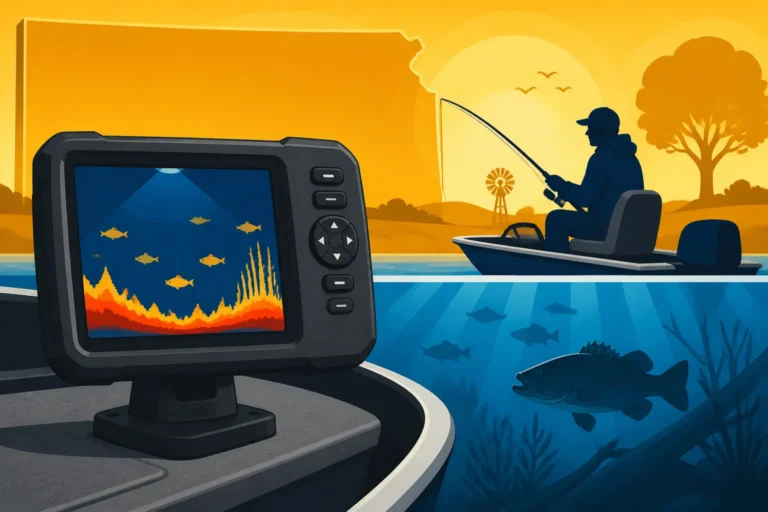
Even on a river, electronics can give you a significant edge. A basic fish finder, sometimes called a sonar unit or depth finder, is invaluable for locating submerged structure like logjams, rock piles, or channel drops where fish tend to hold. It can also help you identify schools of baitfish, which often indicates where predatory species like walleye or catfish might be lurking. While you might not need the extreme depth capabilities for a river that you would for a reservoir, a unit like the Best Fish Finder Under $300 for Anglers can still provide crucial information about bottom contours and potential fish targets. Look for models with decent screen resolution and an easy-to-read display in bright sunlight.
Integrated GPS capabilities, either within your fish finder or as a standalone handheld unit, are equally important. Kansas rivers can be winding and disorienting, and a GPS allows you to mark productive fishing spots (hotspots), navigate back to launch ramps, or follow specific contours. It's also a critical safety tool, helping you maintain situational awareness, especially in unfamiliar territory or deteriorating weather conditions. Ensure all your electronics are securely mounted and protected from the elements, as river environments can be tough on gear.
Anchoring and Rod Holders
Effective anchoring is non-negotiable for river fishing, where current can quickly sweep your boat away from a promising spot. You'll need an anchor that's heavy enough and designed to dig into various river bottoms (mud, sand, gravel). Consider a sturdy box anchor, a grapple anchor, or a mushroom anchor, depending on the typical bottom composition of the rivers you frequent. Having sufficient Best Anchor Rope Length for Lakes is also vital; you need enough scope (the ratio of rope length to water depth) for the anchor to properly set and hold, especially in current. A minimum of 5:1 or 7:1 scope is often recommended for river conditions. Many river anglers will carry two anchors: a primary anchor for holding position and a secondary "current anchor" that can be deployed from the stern to keep the boat from swinging, allowing for more precise presentation of baits or lures.
Rod holders are another essential customization. Whether you're drift fishing for catfish, slow trolling for walleye, or simply need a secure place to put your rod while moving between spots, a good set of rod holders makes a difference. You can find flush-mount holders that sit neatly into the boat's gunwales, clamp-on holders that are easy to install and move, or rail-mount holders if your boat has a rail system. For those interested in Trotline Fishing Techniques in Kansas or Drift Fishing for Kansas Catfish, specialized rod holder setups can make managing multiple lines much easier and more efficient. Choose durable, corrosion-resistant materials, as they'll be exposed to water and weather. You might even explore options like Best Rod Holder Setup for Trolling if you plan to cover ground with multiple lines.
Safety and Comfort Modifications
Safety should always be your top priority on the water. Beyond the aforementioned bilge pump and navigation lights, always ensure you have enough U.S. Coast Guard-approved life jackets (PFDs) for everyone on board, readily accessible. Consult the Kansas Life Jacket and Boating Safety Guide for specific requirements, but generally, a wearable PFD for each person and at least one throwable flotation device (like a cushion) are standard. A whistle or horn is also required for signaling, and a fire extinguisher is necessary if your boat has a permanently installed fuel tank or an enclosed engine compartment.
Beyond the legal necessities, consider adding a basic first aid kit, a multi-tool for minor repairs, and a waterproof container for your phone, keys, and wallet. For comfort, especially on long summer days, a small bimini top can provide much-needed shade, protecting you from the sun's harsh rays. Padded seats, either permanent or removable, can transform a bumpy ride or long wait into a much more pleasant experience. Dry storage compartments, whether built-in or aftermarket solutions you purchase from Bass Pro Shops or Amazon, are crucial for keeping towels, extra clothing, and snacks safe and dry. Remember, a comfortable and safe angler is a more effective angler.
Disclaimer
This article is for general informational purposes only and does not constitute professional advice. Laws, prices and regulations vary by location and change over time. Consult a qualified professional for guidance on your specific situation.