Flathead Catfish Color and Markings
Have you ever reeled in a massive catfish, heart pounding, only to wonder exactly what kind of whiskered giant you just landed? It’s a common scenario, especially with the more elusive species like the flathead. These incredible fish have distinct features, but in the heat of the moment, or in murky water, identifying them can be a challenge. This guide is here to unravel the mystery of the flathead catfish, focusing specifically on their unique color and markings so you can confidently identify your next big catch in Kansas waters.
Understanding the Flathead Catfish's Overall Appearance
Before we dive into the intricate details of their color and markings, let's paint a picture of the flathead catfish's general build. These aren't your typical streamlined fish; they're built for power and predation, perfectly designed for lurking in ambush. When you get one on the line, you’ll immediately feel that strength. They're often described as having a "stocky" or "chunky" body, particularly in larger specimens, which really sets them apart from the more slender channel catfish or even the bulky but differently shaped blue catfish.
Body Shape and Size Characteristics
Flathead catfish are aptly named for their broad, flattened heads. This isn't just a slight flattening; it's quite pronounced, making their head appear disproportionately large compared to their body, especially when viewed from above. Their lower jaw protrudes noticeably beyond the upper jaw, giving them a distinct "underbite" that's a key identifier. This unique mouth structure is perfectly adapted for swallowing prey whole, which is a big part of why they're such formidable predators. The body then tapers back, generally more robust in the front half, gradually becoming more slender towards the tail. They can grow to impressive sizes in Kansas, often reaching lengths that would make any angler proud, and their sheer weight can be staggering. When you're dealing with one of these monsters, every detail counts in identification, especially when considering Kansas State Record Catfish entries.
Fin Structure and Placement
The fins of a flathead catfish also offer important clues. Their dorsal fin, located on their back, is typically well-developed and has a sharp, often painful, spine at the front—a common feature among many catfish species. The pectoral fins, just behind the gills, also sport a rigid spine that can deliver a nasty prick if you’re not careful. These spines are defensive mechanisms, so always handle flatheads with respect and care. Perhaps one of the most distinguishing features is their caudal fin, or tail fin. Unlike the deeply forked tail of a channel catfish or the somewhat less forked tail of a blue catfish, the flathead's tail is notably square or slightly rounded. It's not perfectly straight, but it lacks the deep V-shape you'd expect from other prominent catfish. Observing this detail can be incredibly helpful when you're trying to differentiate species quickly.
Key Coloration Patterns of Flathead Catfish
Now, let's talk color. Flathead catfish aren't known for vibrant, flashy hues. Instead, their coloration is a masterclass in camouflage, designed to blend seamlessly with the bottom of the rivers and lakes where they hunt. This can make them tricky to spot in the water, but once you have one in hand, you'll see a beautiful, mottled pattern that's truly unique.
Base Color Variations
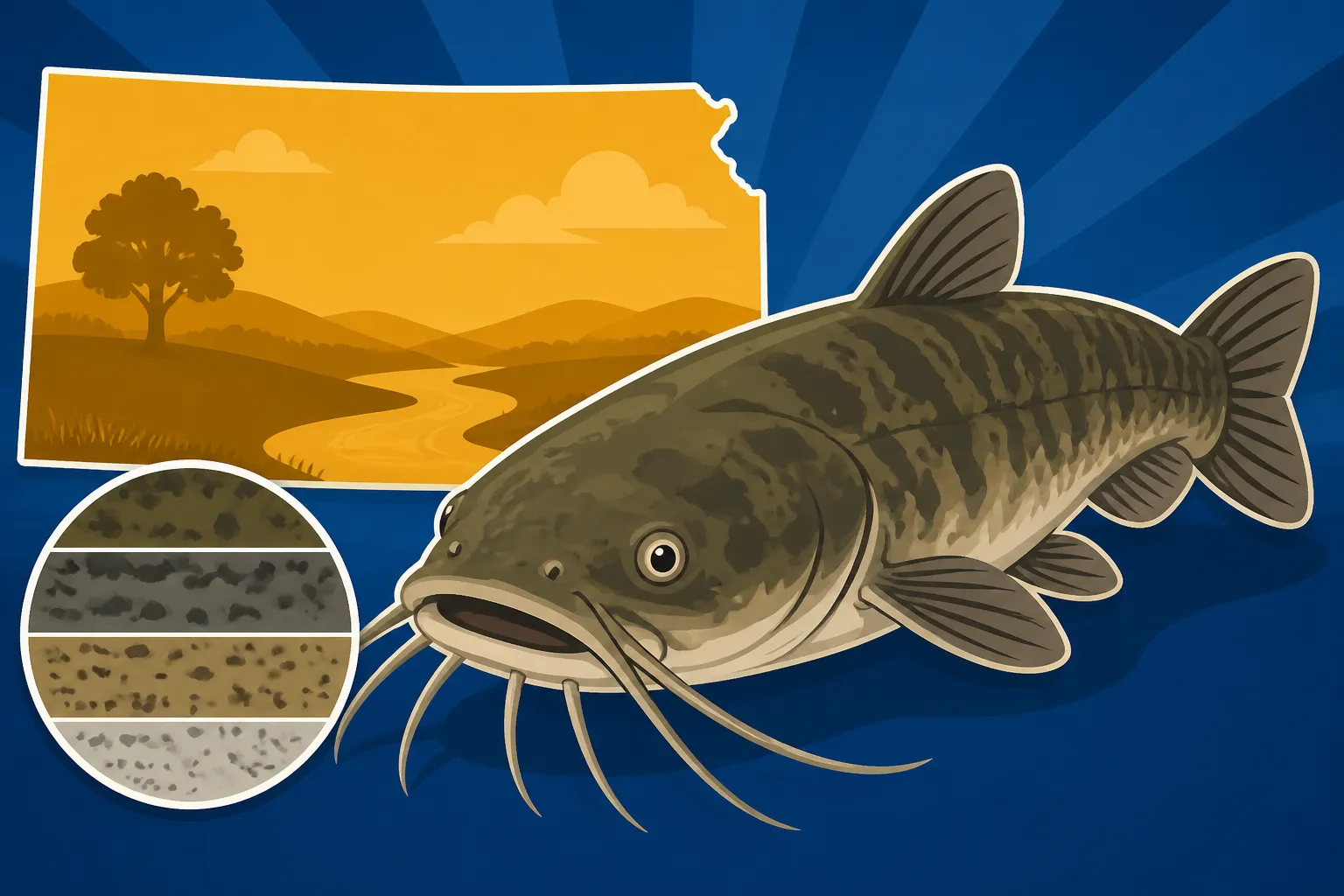
The base color of a flathead catfish can vary quite a bit, primarily depending on the water clarity and the specific habitat they call home. Generally, they tend to be a yellowish-brown, tan, or olive-green on their back and upper sides. In clearer waters with rocky bottoms, they might appear lighter, almost a sandy yellow. In muddier rivers or lakes with dark substrate, their base color can deepen to a rich, dark brown or even a greenish-black. This adaptability in coloration is a testament to their survival instincts. The underside of a flathead is typically lighter, ranging from a pale yellow to a creamy white, often starkly contrasting with their darker back. This lighter belly helps them blend in when viewed from below against the lighter surface of the water or sky, a common camouflage strategy among aquatic predators.
Mottling and Spotting Patterns
What truly sets the flathead apart from other Kansas catfish are the distinct mottling and spotting patterns on their sides and back. Instead of uniform coloration, flatheads display irregular patches of darker browns, olives, and blacks, interspersed with their lighter base color. These patches aren't sharply defined circles or spots; rather, they're blotchy, worm-like, or irregular in shape, creating a marbled or mottled appearance. Imagine looking at a leopard, but with more subtle, organic patterns. This broken pattern helps them disappear against complex backgrounds of submerged logs, rocks, and mud. Juveniles often exhibit more pronounced and distinct mottling, with these patterns becoming slightly more subdued or blended as the fish ages and grows larger, though they always remain a key identifier. You might notice these patterns are particularly vivid right after you pull them out of the water, especially if you're quick to observe before their natural slime coat begins to dry.
Unique Markings and Features for Identification
Beyond their general body shape and overall color, flathead catfish possess several specific markings and anatomical features that are crucial for accurate identification. These are the details that often clinch the deal when you're trying to tell them apart from other species.
Distinctive Head and Mouth Features
The most telling features are found on their head. As mentioned, the flattened head is a dead giveaway, but look closer at the mouth. The prominent lower jaw that extends beyond the upper jaw is a critical detail; it’s not subtle. Their eyes are relatively small compared to their head size, and they are typically positioned more dorsally, or on top of their head, allowing them to look upwards for prey. The barbels, or "whiskers," around their mouth are also important. Flatheads have eight barbels, and while all catfish have them, the flathead's are generally shorter and thicker than those found on, say, a channel catfish. Take a moment to gently observe these features when you've landed one—it really helps cement the visual identification.
Fin Coloration and Edge Details
While the body coloration is often camouflaged, the fins can also offer clues. The dorsal and pectoral fins of a flathead often share the same mottled, yellowish-brown to olive coloration as their body, but with a slight twist. The rays within the fins can appear darker, creating a subtle striped or barred effect. Crucially, pay attention to the edges of these fins. Unlike the clean, often lighter or slightly reddish edges sometimes seen on channel catfish, flathead fins typically have darker, sometimes dusky, margins. And remember that square or slightly rounded caudal fin? Its coloration will usually match the mottled body, lacking the distinct light or dark banding often seen on other species. This consistent, camouflaged fin coloration reinforces their predatory, bottom-dwelling lifestyle.
Absence of Common Markings in Other Catfish
Perhaps just as important as what flatheads do have is what they don't have. They generally lack the distinct, small, dark spots often seen on the sides of juvenile and sometimes even adult channel catfish. While flatheads have mottled patterns, these aren't the discrete, peppered spots that distinguish the channel cat. Nor do they typically exhibit the uniform, silvery-blue sheen that gives the blue catfish its name. Knowing what not to look for can often narrow down your options just as effectively as knowing what to look for. When you’re learning to differentiate, sometimes checking for the absence of a feature is the quickest way to make a call. You can find excellent guides on Kansas Fish Species Guide to compare against other common catches.
Distinguishing Flatheads from Other Kansas Catfish
In Kansas, flathead catfish share the waters with several other popular catfish species, most notably channel catfish and blue catfish. While all three are fantastic sport fish, knowing how to tell them apart is key for following regulations and simply for your own angling knowledge. It's also important for understanding their behavior and habitat preferences, which can influence your Kansas Catfish Fishing Techniques.
Flathead vs. Channel Catfish
The channel catfish is probably the most commonly caught catfish in Kansas, and it's often confused with the flathead, especially by newer anglers. However, there are some very clear differences. The most obvious is the tail fin: channel catfish have a deeply forked tail, almost like a swallow’s tail, whereas the flathead has that distinctly square or slightly rounded tail. Channel catfish also typically have small, dark spots all over their body, particularly when younger, which flatheads lack. Their head is also more tapered and rounded, not flat like a flathead's. Think of a channel cat as having a more "conventional" fish shape compared to the flathead's unique, flattened head. For a deeper dive into their identification, checking out a resource on Flathead Catfish Identification Tips can be immensely helpful.
Flathead vs. Blue Catfish
Blue catfish are another large, powerful species in Kansas, and they can also be confused with flatheads, especially when they reach impressive sizes. The key difference here again lies in the tail and head. Blue catfish have a deeply forked tail, much like a channel cat, but their body is generally a uniform, slate-blue or silvery-blue color, without the mottled patterns of a flathead. Their head, while robust, isn't as flattened as a flathead's, and their upper jaw often protrudes slightly, rather than the flathead's distinctive underbite. Blue cats also have a distinct hump in front of their dorsal fin, a feature not typically present on flatheads. Learning these subtle distinctions means you'll be able to quickly size up your catch, whether it's for sport or for the dinner table. Remember to always be mindful of Kansas Flathead Catfish Daily Limit rules, as limits can vary by species.
Comparative Table of Kansas Catfish Species
To make it even easier to visualize the differences, here’s a quick comparison of the three major catfish species you'll encounter in Kansas. This can be a handy reference tool when you're out on the water, or even when browsing gear on platforms like Amazon for fish identification charts or books.
| Feature | Flathead Catfish | Channel Catfish | Blue Catfish |
|---|---|---|---|
| Head Shape | Broad, noticeably flattened | Rounded, more tapered | Robust, somewhat rounded |
| Jaw | Lower jaw protrudes (underbite) | Upper jaw slightly protrudes | Upper jaw slightly protrudes |
| Tail Fin | Square or slightly rounded | Deeply forked | Deeply forked |
| Body Color | Mottled yellowish-brown to olive | Silvery-gray to olive, often spotted | Uniform slate-blue to silvery-blue |
| Spotting | Irregular blotches, no distinct spots | Often distinct small dark spots (especially juveniles) | Generally no spots |
| Barbels | Shorter, thicker | Longer, more slender | Medium length |
| Typical Habitat | Deep pools, slow currents, woody cover | Variety of habitats, often open water | Large rivers, deep channels, reservoirs |
Implications for Anglers and Conservation
Understanding the color and markings of flathead catfish isn't just about satisfying curiosity; it has real-world implications for your fishing success, legal compliance, and even conservation efforts. These powerful fish are a valuable part of Kansas's aquatic ecosystems, and treating them with respect starts with proper identification.
Legal and Regulatory Compliance
Kansas has specific fishing regulations that can vary by species, including daily creel limits and length restrictions. If you mistake a flathead for a channel cat, or vice-versa, you could inadvertently violate these rules. For instance, Kansas Catfish Daily Limits might have different allowances for flatheads versus other species in certain bodies of water. Knowing precisely what you've caught ensures you're abiding by the law, protecting yourself from potential fines, and contributing to responsible fisheries management. Always double-check the latest regulations before you head out, perhaps with a waterproof copy purchased from a place like Amazon, or by downloading a digital copy from the Kansas Department of Wildlife, Parks and Tourism.
Targeting Specific Species and Techniques
Different catfish species have different behaviors and preferences. Flatheads, with their broad mouths and ambush predatory nature, often respond to different baits and techniques than channel or blue cats. For example, flatheads are notorious for preferring live bait, like sunfish or bullheads, especially when you're practicing How to Catch Flathead Catfish at Night. If you're out targeting a specific species, knowing its identification helps you choose the right Best Bait for Kansas Catfish and the most effective Kansas Fishing Techniques for Beginners. Understanding their coloration, which is designed for camouflage, can also give you clues about where they might be hiding—often in heavy cover, near submerged timber, or along deep banks.
Conservation and Catch-and-Release Practices
For those who practice catch-and-release, accurate identification is paramount. If you're hoping to release a trophy flathead, knowing its specific species ensures you handle it correctly and are aware of any special care it might need. Flatheads are often long-lived fish, and the older, larger individuals are crucial for a healthy fishery. Proper identification helps you appreciate their unique place in the ecosystem. It allows you to contribute to accurate data if you participate in citizen science programs or report your catches. Beyond identification, knowing what you're dealing with ensures you have the right gear, like a strong Best Rod and Reel Combo for Catfish, to land them quickly and release them safely, minimizing stress on the fish.
Disclaimer
This article is for general informational purposes only and does not constitute professional advice. Laws, prices and regulations vary by location and change over time. Consult a qualified professional for guidance on your specific situation.