Best Life Jackets for Kansas Boaters
It's easy to get caught up in the excitement of planning your next Kansas fishing trip—tackle boxes brimming with new lures, rods freshly spooled, and the boat gassed up and ready. But amidst all that preparation, one crucial piece of gear often gets overlooked, sometimes even dismissed: the life jacket. We all think we're strong swimmers, or that "it won't happen to me," but the reality is, accidents on the water can strike quickly and unexpectedly. This guide isn't just about fulfilling a legal requirement; it's about making sure you and your loved ones come home safe, offering a comprehensive look at choosing the best life jackets for Kansas boaters, ensuring comfort, compliance, and peace of mind on every outing.
Why Life Jackets Aren't Optional They're Essential!
When you're out on the vast expanses of Milford Lake, the winding currents of the Kansas River, or even a quiet community pond, the water holds unpredictable power. It's a beautiful environment, yes, but one that demands respect and proper safety measures. Dismissing a life jacket as an inconvenience is a gamble no one should take, especially when the stakes are so high.
The Harsh Realities of Kansas Waters
Think about the conditions you might encounter: a sudden gust of wind whipping across Cheney Reservoir, turning calm waters into choppy waves in an instant. Or perhaps an unexpected mechanical issue that strands you far from shore on Tuttle Creek Lake. Even a simple slip from the bank or a fall out of a kayak in cold water can quickly become a life-threatening situation if you're not wearing a flotation device. The cold temperatures of spring and fall waters, in particular, can incapacitate even strong swimmers in minutes, leading to hypothermia and loss of muscle control. A life jacket provides that critical buoyancy, keeping your head above water and conserving energy until help arrives. It's not just about drowning; it's about the multitude of ways an incident on the water can go from bad to worse without proper flotation.
The sheer size and depth of many Kansas reservoirs also mean that help might not be as immediate as you'd hope. Imagine being miles from the nearest boat ramp or a busy recreational area. What if you're fishing alone, or with children, and an unforeseen event occurs? Having a life jacket on – not just stored in a compartment – is the single most important action you can take to increase your chances of survival and make it easier for rescuers to spot and retrieve you. It's a proactive measure against the "what ifs" that can quickly become stark realities.
Understanding Kansas Boating Safety Laws
Beyond the pure safety aspect, Kansas has specific laws regarding life jacket usage that all boaters must adhere to. Ignoring these isn't just risky; it can lead to fines and legal complications, putting a damper on any fishing trip. These regulations are designed for your protection and the protection of others sharing the waterways. Essentially, there must be a U.S. Coast Guard-approved wearable life jacket for every person on board your vessel, readily accessible. For certain age groups and activities, wearing them is mandatory.
For example, children 12 years of age and younger are required to wear a life jacket when on board any vessel. This isn't a suggestion; it's a law, and for good reason. Youngsters, even those who can swim, can panic or become disoriented quickly in the water. Furthermore, anyone being towed behind a boat, like on skis or a tube, must also wear a life jacket. It's also important to remember that stand-up paddleboards, canoes, kayaks, and even some inflatable fishing crafts are considered vessels, and the same rules apply. For a deeper dive into the legal specifics, you can always check out resources like Kansas Boating Safety Equipment Requirements or Kansas Fishing Regulations Explained.
Beyond the Law: Personal Responsibility and Peace of Mind
While understanding the law is crucial, viewing life jackets as merely a legal obligation misses the bigger picture. True safety comes from embracing personal responsibility. It's about looking out for yourself, your family, and your fishing buddies. When you insist everyone on your boat wears a properly fitted life jacket, especially during active fishing or when conditions are less than ideal, you're not just complying with a rule; you're actively creating a safer environment.
Consider the peace of mind that comes with knowing everyone is protected. You can focus more on the joy of the catch, the beauty of a Kansas sunset over the water, or simply the companionship, rather than constantly worrying about potential hazards. This proactive approach to safety frees you up to truly enjoy your time outdoors. It also sets a positive example for younger generations, instilling good habits that will serve them well throughout their lives on the water. Ultimately, a life jacket is an investment in safety that pays dividends in confidence and security every time you launch your boat. You might think you don't need a specific Kansas Fishing License Guide to understand this, but all regulations are ultimately about safe and responsible enjoyment of our natural resources.
Deciphering Life Jacket Types: The USCG Classification System
Navigating the world of life jackets can feel a bit like deciphering a secret code, thanks to the U.S. Coast Guard (USCG) classification system. Instead of a simple "one size fits all," there are distinct types, each designed for different situations and offering varying levels of buoyancy. Understanding these classifications is key to choosing the right jacket for your specific Kansas boating adventures. It’s not about finding any life jacket, but the right one that will offer the most effective protection when you need it most.
Type I: Offshore Marvels
These are the heavy-duty heroes of the life jacket world, often seen on commercial vessels or during extreme offshore conditions. Type I PFDs (Personal Flotation Devices) provide the most buoyancy, typically around 22 pounds for adults, and are designed to turn an unconscious person face-up in the water. They are bulky, yes, but that bulk translates directly into superior flotation and stability, especially in rough water or when rescue might be delayed.
While perhaps overkill for a casual afternoon of Kansas Crappie Fishing Techniques on a calm lake, a Type I might be considered for extended trips far out on larger reservoirs like Milford Lake where conditions can change rapidly and help might be a long time coming. Their high visibility colors and robust construction make them ideal for situations where being easily spotted and staying afloat for hours is paramount. If you're venturing far from shore, perhaps chasing big Kansas Blue Catfish Facts and Limits in the main lake basins, and you anticipate potential rough conditions, a Type I offers the ultimate in safety.
Type II: Near-Shore and Inland Versatility
Type II PFDs offer a good balance of buoyancy (around 15.5 pounds for adults) and wearability, making them a popular choice for near-shore and inland waters. They are designed to turn most unconscious wearers face-up in calm conditions, but this capability might be compromised in rougher water. These are your everyday, grab-and-go vests often found on pontoon boats, fishing boats, and smaller recreational crafts.
Many families keep a supply of Type II vests on board because they are less bulky than Type I, more affordable, and still provide excellent protection for general boating activities. They are perfect for a day of fishing with friends on Clinton Lake or a leisurely cruise on Perry Lake. While they won't offer the same security as a Type I in big waves, they are more than adequate for typical Kansas lake and river conditions where rescue is likely to be relatively quick. For many anglers, the Type II is a reliable and practical choice that satisfies Kansas Boating Safety Equipment Requirements while offering comfortable use.
Type III: Flotation Aids for Active Boaters
If you're an active angler, kayaker, or enjoy other watersports, a Type III PFD is likely your go-to. These "flotation aids" offer similar buoyancy to Type II (15.5 pounds for adults) but are designed for maximum comfort and freedom of movement. They are often shaped like vests or jackets, with features like large armholes and multiple adjustment straps to ensure a snug, non-restrictive fit. The trade-off for this enhanced comfort is that they are not designed to turn an unconscious person face-up in the water; the wearer typically needs to be conscious and able to assist themselves.
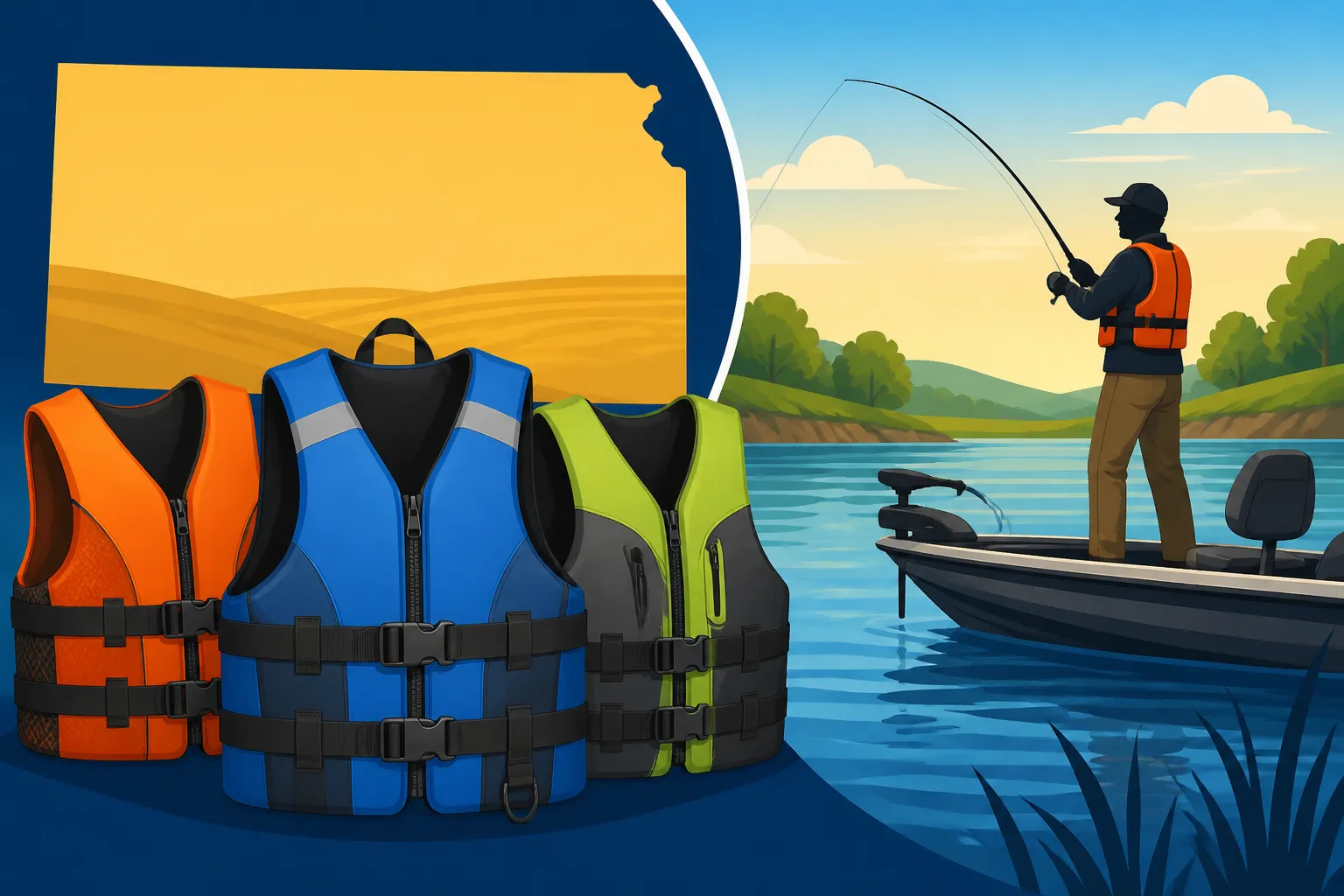
For someone spending the day Kansas Kayak Fishing Techniques, casting for Kansas Largemouth Bass Facts, or actively working lines from a boat, the Type III is invaluable. Its comfortable fit means you're more likely to wear it consistently, which is always the best safety practice. You'll find these in a variety of styles, including fishing-specific vests with pockets for tackle, which you can find at stores like Bass Pro Shops or online retailers like Amazon. Remember, the best life jacket is the one you actually wear!
Type IV: Throwable Devices Not for Wearing!
Here's an important distinction: Type IV PFDs are not designed to be worn. These are throwable devices, like ring buoys or buoyant cushions, intended to be thrown to a person in the water who needs immediate assistance. They provide a minimum of 16.5 pounds of buoyancy. Every boat over 16 feet in length (excluding canoes and kayaks) is required to have at least one Type IV device on board, immediately accessible.
Think of it as a rescue tool, not a personal flotation device. While essential for quick retrieval of someone who has fallen overboard, they do not replace the requirement for each person to have a wearable life jacket. You wouldn't wear a throw cushion while fishing; you'd grab it to help a struggling swimmer. Always make sure your Type IV is in good condition, not waterlogged, and easy to reach in an emergency, perhaps stored in an open compartment near the helm.
Type V: Special Use and Hybrid Vests
Type V PFDs are a fascinating category because they encompass a wide range of specialized designs, each approved for a specific activity or situation. These often combine elements of other types and provide buoyancy levels comparable to Type II or III (typically 15.5 to 22 pounds). Examples include inflatable life jackets, work vests, deck suits, and whitewater rafting vests. The key here is that a Type V PFD must be worn for it to count as a legally required PFD on board the vessel.
Many modern anglers and paddlers are drawn to inflatable Type V vests because of their incredibly low profile and comfort. These vests inflate either automatically upon immersion in water or by pulling a manual cord, providing significant buoyancy once activated. They are fantastic for folks who find traditional foam vests too bulky for casting or paddling. You can find excellent options for these on Amazon or at your local Bass Pro Shops. Just remember that maintenance and re-arming kits are crucial for inflatable vests, and they are not suitable for non-swimmers or children under a certain weight/age. Always check the label carefully for the specific conditions under which a Type V PFD is approved.
| USCG Type | Primary Use Case | Buoyancy (Adult Avg.) | Turns Unconscious Face Up | Comfort/Mobility | Best For Kansas Fishing |
|---|---|---|---|---|---|
| Type I (Offshore) | Offshore, rough water, delayed rescue | 22 lbs | Yes (most conditions) | Low | Extended trips on large, rough reservoirs |
| Type II (Near-Shore) | Near-shore, inland, general boating | 15.5 lbs | Yes (calm conditions) | Medium | General lake fishing, pontoon boats |
| Type III (Flotation Aid) | Active watersports, recreational use | 15.5 lbs | No (wearer assistance) | High | Kayak fishing, active casting, comfortable all-day wear |
| Type IV (Throwable) | Rescue device, emergency throwing | 16.5 lbs | N/A (not worn) | N/A | Essential for boats over 16 ft, for emergency rescue |
| Type V (Special Use) | Specific activities (inflatables, work vests) | Varies (15.5-22 lbs) | Varies by design | Varies (often high for inflatables) | Anglers seeking low-profile, specific-activity vests |
Finding Your Perfect Fit: Comfort, Activity, and Sizing
Choosing a life jacket isn't just about picking a color you like or the cheapest option. It's about finding a PFD that fits your body, suits your fishing style, and provides the maximum amount of protection. An ill-fitting life jacket is not only uncomfortable but can be just as dangerous as not wearing one at all. It can ride up, chafe, or even come off in the water, negating its purpose entirely.
Prioritizing Comfort for All-Day Wear
Let's be honest, if a life jacket isn't comfortable, you're less likely to wear it. And if you don't wear it, it can't save you. This is especially true for long days out on the water, whether you're trying your hand at Kansas Walleye Fishing Techniques or enjoying a leisurely afternoon of Kansas Panfish Guide fishing. Modern life jackets, particularly Type III and many Type V inflatables, are designed with comfort in mind. Look for features like soft, flexible foam, contoured designs that don't restrict arm movement, and breathable fabrics that prevent overheating.
When you're trying one on, sit down, stand up, reach, and twist as if you were casting or reeling in a fish. Does it chafe? Does it ride up to your ears when you sit? Does it feel restrictive across your shoulders? Pay attention to these details. A comfortable life jacket becomes an extension of your fishing gear, not a hindrance. Many top brands found at retailers like Bass Pro Shops have invested heavily in ergonomic designs to ensure anglers can wear their vests all day without discomfort.
Matching Your Jacket to Your Activity
Your fishing activities in Kansas will heavily influence the best life jacket choice. Are you primarily a bank angler, simply needing a vest for emergencies while wading shallow rivers for Kansas Channel Catfish Daily Limit or when fishing off a dock? Or are you a dedicated kayak angler, paddling miles to reach prime spots on Wilson Lake? Each scenario calls for a different emphasis.
For fast-paced boating or jet skiing, a snug-fitting Type III with extra safety straps might be ideal. For kayak fishing, a vest with a high back is crucial so it doesn't bunch up against the seat, and fishing-specific vests with pockets and tool attachments can greatly enhance your experience. If you're ice fishing, a specialized ice fishing suit with built-in flotation (often a Type V) could offer warmth and safety. Think about how you move, what gear you carry, and what conditions you typically face. An inflatable Type V offers superb freedom of movement for casting for Kansas State Record Walleye, but it's critical to ensure it's in good working order.
The Importance of Proper Sizing It's Not Just About Weight!
This is perhaps the most critical aspect of choosing a life jacket. A life jacket's effectiveness hinges almost entirely on its fit. It's not just about meeting a general weight range; it's about chest size, torso length, and a snug, secure fit. Too loose, and it can ride up around your head, pushing you down or even coming off. Too tight, and it's simply unwearable for any length of time.
To ensure a proper fit:
- Check the Label: Look for the USCG approval and the weight/chest size recommendations.
- Try it On: This is non-negotiable. Put it on and fasten all zippers, buckles, and straps.
- Adjust: Cinch down all straps until it feels snug but not constrictive.
- The "Lift Test": Have someone gently pull up on the shoulder straps. If the jacket slides up past your ears or mouth, it's too big. For children, this test is even more critical; you should not be able to pull the vest up over their ears.
Remember that adult life jackets are sized by chest circumference, while children's vests are sized by weight. Always follow these guidelines strictly. Retailers like Bass Pro Shops often have fitting guides and knowledgeable staff, and online platforms like Amazon provide detailed sizing charts that should be consulted before purchase. Don't compromise on fit; your life could depend on it.
Key Features to Look for in a Quality Life Jacket
Once you understand the different types and the importance of a proper fit, it's time to delve into the specific features that differentiate a good life jacket from a great one. These details can significantly impact your comfort, safety, and the jacket's longevity, making your investment worthwhile for many seasons of Kansas Spring Fishing Guide adventures.
Material and Durability
The materials used in a life jacket dictate its durability, comfort, and how well it stands up to the rigors of the Kansas outdoors. Most foam-filled PFDs use closed-cell foam, like PVC or polyethylene, for buoyancy. The outer shell is typically made from robust, quick-drying fabrics such as nylon, polyester, or neoprene. Nylon is a common and affordable choice, offering good abrasion resistance. Polyester is known for its UV resistance, which is a big plus under the intense Kansas sun, preventing degradation and fading over time. Neoprene, often used in watersports vests, is exceptionally comfortable and flexible, but can be warmer.
For inflatable vests, the outer shell needs to be highly durable to protect the inflatable bladder. Look for strong ripstop nylon or similar materials. Stitching quality is also paramount. Examine seams for double stitching and reinforcement at stress points. A well-constructed life jacket will have heavy-duty zippers and sturdy buckles that can withstand repeated use and exposure to water, ensuring your investment lasts. You want a jacket that can handle being tossed in the boat, left in the sun, and still perform when needed.
Adjustability and Closure Systems
A truly effective life jacket isn't just one size; it's adjustable. Multiple adjustment points allow you to customize the fit for maximum security and comfort, even if you're wearing different layers of clothing depending on the season. Look for several strong straps – typically across the chest, waist, and shoulders – with durable buckles. These straps should be easy to tighten and loosen, even with wet hands.
Common closure systems include zippers, buckles, or a combination of both. Zippers often provide a more secure initial closure, while buckles allow for fine-tuning the fit and quick release if necessary. Some specialized fishing vests might even have drawstrings for waist adjustment. For youth life jackets, a crotch strap is often a critical feature to prevent the vest from riding up over the child's head in the water, ensuring they stay safely afloat. Good adjustability is key to ensuring that the life jacket remains snug and performs optimally in an emergency, rather than becoming a floating impediment.
Safety Enhancements and Accessories
Beyond the core function of flotation, many life jackets come with additional features that enhance safety and user experience. High-visibility colors like bright orange or yellow are crucial for being spotted in the water, especially during low light conditions or if you're out on large bodies of water like Wilson Lake. Reflective tape adds another layer of visibility, making you easier to see with a spotlight at night.
Other useful accessories for anglers include pockets for small tackle, pliers, or a fishing license. Some vests even have attachment points for a whistle, which is an invaluable safety tool for signaling for help, especially if you're doing a bit of Kansas Night Fishing Guide work. A strong grab handle on the back of the neck is particularly useful for child life jackets or for quickly pulling someone out of the water. For inflatable PFDs, a CO2 cylinder status indicator lets you know if the vest is armed and ready. These seemingly small additions can make a big difference in an emergency or simply improve your overall comfort and preparedness on the water.
Caring for Your Life Jacket: Longevity and Reliability
A life jacket isn't a "set it and forget it" piece of equipment. Like your rods, reels, and tackle, it requires proper care and maintenance to ensure it remains effective and reliable. Neglecting your life jacket can compromise its buoyancy and structural integrity, turning a life-saving device into a false sense of security.
Routine Inspection and Maintenance
Make it a habit to inspect your life jackets regularly, ideally before and after every use, and especially at the start of each fishing season. Look for signs of wear and tear:
- Fabric Tears: Any rips, punctures, or excessive fraying can compromise the integrity of the outer shell.
- Strap Damage: Check for frayed or cut straps, and ensure buckles are not cracked, broken, or corroded.
- Zipper Function: Make sure zippers operate smoothly and don't get stuck.
- Seams: Inspect stitching for signs of coming apart.
- Foam Condition: Squeeze the foam panels. If they feel brittle, compressed, or waterlogged, the buoyancy might be compromised.
- Inflatable PFDs: For inflatable vests, check the CO2 cylinder for corrosion and verify the "armed" indicator shows it's ready. You should also perform an oral inflation test periodically to check for leaks in the bladder.
If you notice any significant damage, it's time to consider replacing the vest. You might also want to consult resources like Kansas Fishing License Replacement Process in Kansas as a reminder that proper care extends beyond just the gear. After use, especially in saltwater (though less common for Kansas fishing, it's good practice for general boating), rinse your life jacket with fresh water to remove any dirt, slime, or residue, and then allow it to air dry thoroughly.
Proper Storage to Extend Life
How you store your life jackets can significantly impact their lifespan. Avoid leaving them exposed to direct sunlight for prolonged periods, as UV rays can degrade fabrics and foam over time. Don't store them in damp, confined spaces where mildew can grow, which not only smells bad but can also damage materials.
Instead, store life jackets in a cool, dry, well-ventilated area, away from direct heat sources and harsh chemicals. Hanging them up (rather than stacking them) allows for better airflow and helps maintain the shape of the foam. If you have limited space in your boat, consider a mesh bag or a dedicated compartment that offers some ventilation. Never use a life jacket as a fender or seat cushion, as compression can damage the flotation material and reduce its effectiveness. Treating your life jacket with respect, much like you would your favorite Best Rod and Reel Combo for Walleye, will ensure it's ready when you truly need it.
When It's Time to Replace Your Vest
Even with the best care, life jackets don't last forever. Over time, exposure to sun, water, and general use will cause materials to break down and buoyancy to diminish. There's no hard-and-fast expiration date on a life jacket, but there are clear indicators it's time for a new one.
If a life jacket shows signs of significant damage as mentioned above (tears, compromised straps, brittle foam), or if it feels noticeably less buoyant when you try it on, it's no longer reliable. Another good test is to go to shallow water and actually put the vest on and see how it performs. If it doesn't keep your head comfortably above water, it's time to replace it. Think of it as replacing old fishing line or worn-out waders; it's a necessary step to maintain your safety and effectiveness on the water. Investing in a new, high-quality life jacket from a reputable source, whether it's Bass Pro Shops or Amazon, is a small price to pay for continued peace of mind and protection on your next Kansas fishing adventure.
Specialized Life Jackets for Specific Kansas Boaters
While the general classifications cover most scenarios, certain situations and user groups call for specialized life jacket designs. Recognizing these unique needs ensures everyone on board, from the youngest angler to your four-legged companion, is adequately protected.
Life Jackets for Children and Infants
Children are particularly vulnerable on the water, and their life jackets need extra consideration. Kansas law mandates that children 12 and under wear a life jacket on board any vessel. This is a crucial rule for their safety. Child-specific PFDs are designed differently from adult versions, with features tailored to smaller bodies and varying levels of swimming ability.
Look for U.S. Coast Guard-approved life jackets that are clearly labeled for children by weight range (e.g., Infant, Child, Youth). Crucial features include a crotch strap or leg strap to prevent the vest from riding up and slipping off, a large head support collar to keep their head above water, and sometimes a grab handle for easy retrieval. Bright, high-visibility colors are also essential for easy spotting. Always make sure the fit is snug and passes the "lift test" where you lift the child by the shoulder straps, ensuring the vest doesn't slide past their ears. Resources like Do Kids Need a Fishing License in Kansas? also underscore the importance of understanding rules for younger participants.
Pet Life Jackets for Your Furry Co-Anglers
If your dog is your constant fishing companion, don't forget their safety! While not legally required, a pet life jacket is a wise investment, especially for dogs who aren't strong swimmers or if you're boating in deep or fast-moving water. Even good swimmers can become disoriented, exhausted, or injured in the water.
Pet life jackets are designed to provide buoyancy, keeping your dog's head above water and making it easier for them to swim and for you to retrieve them. Look for features like strong grab handles on the back, adjustable straps for a secure fit around the chest and belly, and bright colors for visibility. Make sure to measure your dog carefully (chest girth and neck) to get the right size. Just as you wouldn't send a child into the water without a properly fitted PFD, the same goes for your beloved pet.
Inflatable Life Jackets for Anglers and Kayakers
As briefly touched upon, inflatable life jackets (often Type V) have become incredibly popular, especially among serious anglers and kayakers who prioritize freedom of movement. These vests are compact and lightweight, often barely noticeable when worn, making them ideal for casting, paddling, or any activity where bulky foam might hinder performance.
Inflatable PFDs come in two main types:
- Manual Inflation: You pull a cord to deploy the CO2 cartridge and inflate the vest.
- Automatic Inflation: The vest automatically inflates upon immersion in water.
Both types offer excellent buoyancy once inflated. However, they are not suitable for non-swimmers, children, or for activities like personal watercraft riding where frequent immersion is expected. They also require more maintenance than foam vests, including regular inspections of the CO2 cartridge and re-arming kits after each inflation. Despite this, for many experienced Kansas anglers, especially those navigating a Kansas Kayak Fishing Gear Guide or fishing from a small boat, the comfort and low profile of an inflatable PFD from brands available at Bass Pro Shops or on Amazon are unmatched, greatly increasing the likelihood that they'll be worn at all times.
Disclaimer
This article is for general informational purposes only and does not constitute professional advice. Laws, prices and regulations vary by location and change over time. Consult a qualified professional for guidance on your specific situation.