Kansas State Record Crappie
For many Kansas anglers, the thought of catching a state record fish is a dream, a whispered aspiration during a quiet morning on the water. While bass, catfish, and walleye often get the glory, the humble crappie holds a special place in our hearts, providing both excellent table fare and, occasionally, a truly massive trophy. If you've ever wondered about the biggest crappie ever pulled from a Kansas lake or river, and how you might one day challenge that record, this comprehensive guide will walk you through everything you need to know about the Kansas state record crappie.
The Allure of the State Record Crappie
There’s something truly magical about pursuing a state record. It’s not just about the size of the fish; it’s about the dedication, the knowledge, and perhaps a little bit of luck that culminates in a truly unforgettable catch. For crappie anglers, breaking a state record is the ultimate achievement, putting your name in the record books alongside legends.
The Current Crappie Record in Kansas
The Kansas state record crappie stands as a testament to the incredible fish that swim in our waters. Imagine reeling in a slab that tips the scales at an astonishing weight, a fish that represents the pinnacle of its species in our state. This record isn't just a number; it's a story, a moment etched in time for the lucky angler who landed it. Whether it's a colossal white crappie or a massive black crappie, the current record holder exemplifies the potential for truly enormous panfish in Kansas. Knowing this benchmark ignites a fire in many anglers, driving them to learn more, fish harder, and dream bigger.
Why Crappie are So Popular
Crappie are undeniably one of Kansas's most beloved game fish, and for good reason. They're abundant, relatively easy to catch for beginners, and put up a fun fight on light tackle. Beyond that, they are absolutely delicious, making them a prime target for anglers looking to fill their freezer. From the thrill of a fast bite to the satisfaction of a fish fry, crappie offer a complete angling experience. This widespread appeal means countless anglers are out on the water, honing their skills and, sometimes unknowingly, getting closer to that elusive record-breaking catch. The sheer number of crappie in our lakes and reservoirs increases the chances of encountering a true giant, adding to the excitement.
Understanding Kansas Crappie: White vs. Black
Before you can even dream of catching a state record crappie, you need to understand the fish themselves. Kansas is home to both white crappie and black crappie, and while they share many similarities, there are distinct differences that can influence where you find them and how you target them. Understanding these nuances is crucial for any serious crappie angler. For a deeper dive into the species, check out our Kansas Fish Species Guide.
White Crappie vs. Black Crappie: Key Differences
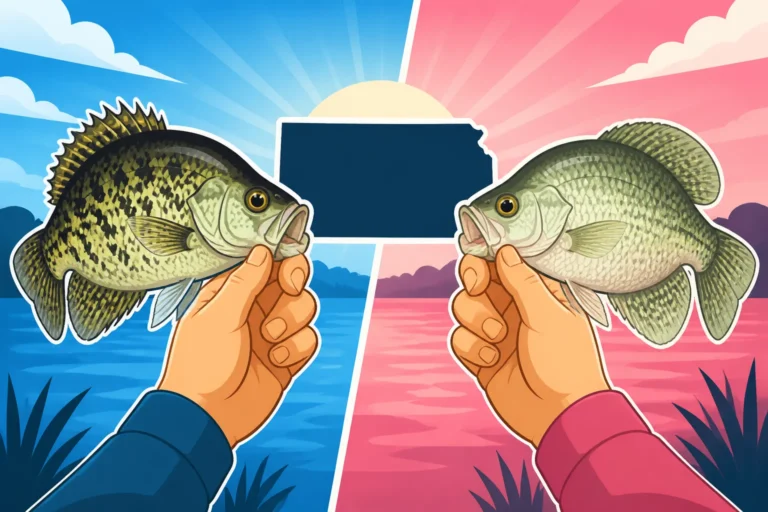
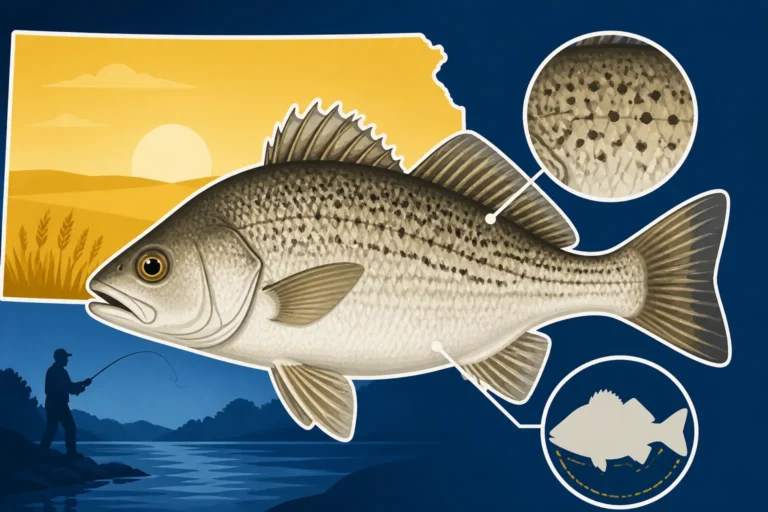
While both are fantastic fish, white and black crappie have some easily identifiable differences that can help you distinguish between them in your livewell. White crappie typically have vertical bars on their sides, often seven or eight, and their dorsal fin has six spines. They tend to prefer murkier water and thrive in open areas of large reservoirs and river systems. On the other hand, black crappie usually have an irregular pattern of spots and speckles, resembling camouflage, and their dorsal fin boasts seven or eight spines. They generally favor clearer water with more vegetation and submerged structure.
These distinctions are more than just academic; they inform your fishing strategy. If you're fishing a turbid, large reservoir like Milford Lake, you might be more likely to encounter white crappie, prompting you to use techniques better suited for open water or submerged brush piles. If you're in a clearer, more vegetated area, black crappie might be the dominant species, requiring presentations closer to weed lines or timber. Knowing which species you're targeting can make all the difference when you're looking for that record-breaking slab. For detailed identification, refer to Kansas White Crappie Identification and Kansas Black Crappie Identification.
Crappie Biology and Behavior
Both white and black crappie are members of the sunfish family, known for their flattened, disc-shaped bodies. They are prolific spawners, typically laying eggs in the spring when water temperatures reach the mid-50s to low-60s Fahrenheit. During this time, they move into shallower waters, often around submerged brush, docks, or other cover, making them more accessible to anglers. Outside of the spawn, crappie tend to school, moving between shallow feeding grounds and deeper, more comfortable holding areas. They are predatory, feeding primarily on smaller fish, insects, and crustaceans.
Understanding their seasonal movements and preferred habitats is paramount. In spring, you might find them in just a few feet of water, while in summer and winter, they often retreat to deeper brush piles, ledges, or channels. Their schooling behavior means that where you catch one crappie, there are often many more. This can lead to incredible fishing days, but it also means you might have to spend time searching for those schools, especially the ones holding the biggest fish. Factors like water temperature, forage availability, and available cover all play a role in where crappie will be throughout the year.
Where the Big Ones Lurk: Prime Crappie Habitats in Kansas
Kansas offers a wealth of fishing opportunities, and while crappie can be found in nearly every water body, some locations are simply renowned for producing larger, trophy-sized fish. Knowing these hotspots and what makes them tick is key for anyone serious about catching a state record.
Reservoirs Known for Large Crappie
Kansas's large reservoirs are often the go-to destinations for trophy crappie. Lakes like Milford Lake, Cheney Reservoir, and Wilson Lake have reputations for holding impressive populations of big crappie. These massive bodies of water offer a diverse range of habitats, from submerged timber and rock piles to expansive main lake points and deep creek channels. Anglers who consistently pull out large crappie from these reservoirs have typically spent countless hours mapping the bottom, identifying key structure, and understanding the seasonal migration patterns of the fish.
For example, Milford Lake Crappie Fishing is famous for its prolific white crappie fishery, with anglers often targeting standing timber and brush piles in its numerous coves. Similarly, reservoirs with clearer water, like Wilson Lake, can produce exceptional black crappie, often found relating to submerged cedar trees or rocky bluffs. It's not just about the size of the lake, but the quality of the habitat and the forage base available. Reservoirs with abundant shad populations often grow the biggest crappie because they have a rich food source.
State Fishing Lakes and Community Ponds
Don't underestimate the potential of Kansas State Fishing Lakes and Community Ponds. While smaller, these waters are often intensely managed by the Kansas Department of Wildlife, Parks and Tourism (KDWPT) to provide excellent fishing opportunities. Many are regularly stocked and have specific regulations designed to promote healthy fish populations, including those with trophy potential. These smaller lakes can be less intimidating than the vast reservoirs, making them great places to refine your crappie fishing skills and potentially stumble upon a true giant.
The advantage of these smaller bodies of water is that crappie are often concentrated, and fishing pressure might be less intense than on the major reservoirs. Look for older ponds with established brush piles, submerged roadbeds, or even old farm ponds that have been taken over by the state. Some of the most surprising catches come from these unassuming locations. Always check the specific regulations for each community lake, as they can sometimes differ from statewide rules. For instance, Kansas Community Fishing Lake Rules might have unique restrictions.
River Systems and Tributaries
While reservoirs and lakes get most of the attention, Kansas's river systems and their tributaries can also hold incredible crappie, especially white crappie. Rivers like the Kansas River, Republican River, and Arkansas River, particularly in their slower-moving sections or oxbows, can provide excellent habitat. During high water events or specific times of the year, crappie will move into these riverine environments, often seeking slack water areas, fallen timber, or brush piles along the banks.
Fishing rivers requires a different approach, often involving anchoring upcurrent and drifting baits or jigs into likely holding areas. Look for eddies, log jams, and areas where tributaries join the main river. These convergences often create current breaks and food delivery systems that attract crappie. The key is to find the calmer water where crappie don't have to fight a strong current, but still have access to the river's abundant food sources.
Targeting Trophy Crappie: Techniques and Tactics
Catching crappie is one thing; catching a record-breaking crappie is another entirely. It requires a more refined approach, specialized gear, and a keen understanding of crappie behavior. Trophy crappie are often older, wiser, and more wary than their smaller counterparts, demanding precision and persistence.
Advanced Lures and Baits for Big Crappie
When it comes to lures and baits for trophy crappie, sometimes you need to think a little bigger than your average crappie jig. While small jigs and minnows are effective for numbers, a larger profile bait can often entice a larger fish. Consider using 2-inch to 3-inch soft plastic crappie baits, often in natural colors like shad or chartreuse, rigged on a heavier jig head. Hair jigs or small swimbaits can also be highly effective. Live bait, particularly larger minnows or small shiners, presented on a slip bobber or tightlined, is a classic method that often tempts the biggest fish.
For those serious about their tackle, exploring options on platforms like Amazon can be highly beneficial. You can find specialized crappie rods, high-quality fluorocarbon lines, and a wide array of premium crappie jigs and soft plastics designed for picky fish. Remember, a larger crappie often isn't looking for the smallest meal; they're looking for an easy, substantial one. Don't be afraid to experiment with different sizes and presentations.
Strategic Fishing Techniques for Record Seekers
Chasing a record means refining your techniques. This isn't just about casting and reeling; it's about precision, patience, and adapting to conditions.
- Vertical Jigging: When crappie are suspended in deep water or tight to structure, vertical jigging directly over them using a sensitive rod and a good fish finder is incredibly effective. The slightest bite from a large crappie can be detected this way.
- Slow Trolling: Also known as "spider rigging," slow trolling multiple rods with jigs or live bait at varying depths can cover a lot of water and locate scattered schools of big crappie, particularly in open water reservoirs.
- Structure Fishing: Focus intently on structure – submerged brush piles, old roadbeds, bridge pilings, and creek channel drops. These are magnets for larger crappie seeking ambush points. Use your electronics to pinpoint these structures and then work them thoroughly.
- Night Fishing: Many of the largest crappie are caught at night, especially during the warmer months. Crappie are light-sensitive, and the cover of darkness often brings them out from deeper haunts to feed in shallower water. Use submersible lights to attract baitfish, and the crappie will follow. Our Kansas Night Fishing Guide has more tips.
- Fishing at the Right Time: Pay attention to Best Time of Day to Fish in Kansas and Weather Patterns and Kansas Fishing Success. Often, the biggest crappie bite during low-light conditions (dawn/dusk) or during stable weather patterns that encourage feeding.
For more general techniques, check out Kansas Crappie Fishing Techniques.
Gear Up for Success
To consistently target and land record-sized crappie, your gear needs to be up to snuff.
- Rods and Reels: A sensitive, light-action crappie rod, often 6 to 9 feet in length, paired with a small spinning reel, is ideal. This setup allows you to feel the most subtle bites and provides the backbone needed to control a large crappie. For specific recommendations, see Best Rod and Reel Combo for Crappie.
- Line: Use light monofilament or fluorocarbon line, typically 4 to 6 pound test. The low visibility of fluorocarbon can be a huge advantage in clear water, while mono offers a bit more stretch for fighting larger fish.
- Electronics: A good fish finder or depth finder is almost a necessity for serious crappie anglers. It helps you locate schools, identify structure, and determine the depth at which fish are holding. Many anglers research options on Amazon for advanced fish finders before hitting the water.
- Nets and Scales: Have a good landing net with a soft mesh to protect the fish if you plan to release it. Crucially, if you think you've caught a record, you'll need a certified scale. More on that in the next section!
Beyond the Catch: Documentation and Regulations
Catching a truly massive crappie is only half the battle. If you believe you’ve landed a state record, you need to know exactly what steps to take to ensure your catch is properly documented and recognized. Without following proper protocol, that potential record will remain just a personal best.
Official Rules for State Record Fish
The Kansas Department of Wildlife, Parks and Tourism (KDWPT) sets specific rules for submitting state record fish. These rules are in place to ensure fairness, accuracy, and prevent false claims. Generally, the fish must be caught by legal means (rod and reel, bowfishing, etc.) and within the legal fishing season for that species. The fish must be weighed on a certified scale, usually at a grocery store, marina, or another establishment that has regularly calibrated scales. A witness, often the person operating the scale, will need to verify the weight.
It's also crucial to identify the species correctly. While white and black crappie records are maintained separately, misidentification could invalidate a claim. Have a clear photograph of the fish, preferably with another object for scale, and consider taking it to a KDWPT office or a knowledgeable biologist for definitive identification. Don't rush to fillet your fish if you suspect it's a record! You'll need to keep the entire fish intact for official verification.
Measuring and Weighing Your Potential Record
Once you land what you believe is a state record crappie, time is of the essence.
- Keep the Fish Alive (if possible): If you can keep the fish alive in a livewell or cooler with ice, this is ideal. This maintains its weight and condition for official measurement.
- Locate a Certified Scale: Find a business with a state-certified scale. Supermarkets, bait shops, and some marinas often have these. Call ahead to confirm.
- Weigh with a Witness: Weigh the fish on the certified scale with a witness present. Record the exact weight to the nearest ounce.
- Measure Length and Girth: While weight is the primary factor for state records, length and girth measurements are often required or highly useful for documentation. Use a flexible measuring tape and take photos of these measurements.
- Photographs: Take several clear, high-resolution photos of the fish from different angles. Include yourself with the fish, and a photo of the fish next to a ruler or measuring device.
- Contact KDWPT: As soon as possible, contact KDWPT to report your potential record. They will guide you through the official submission process, which may involve further inspection of the fish.
It’s a thorough process, but it ensures the integrity of the state record system. Don't get discouraged by the steps; it's all part of the excitement of a potential record.
Understanding Daily Limits and Length Restrictions
Even when pursuing a state record, you must always adhere to the standing Kansas fishing regulations. This includes Kansas Daily Creel Limits by Species and Kansas Crappie Length and Bag Limits. These limits are put in place to manage fish populations and ensure sustainable fishing for everyone. While a record crappie might be the only fish you catch that day, it doesn't exempt you from following the rules for other fish.
For example, crappie often have a minimum length limit and a generous daily bag limit, reflecting their abundance. However, if you're fishing in a specific community lake or a designated slot limit area, those rules might supersede the general statewide regulations. Always double-check the current KDWPT fishing regulations digest before heading out. Violating these rules, even accidentally, could lead to penalties and would certainly disqualify any potential record claim. Being a responsible angler is part of the sport, especially when you're aiming for the top. For a complete overview, consult the Kansas Fishing Regulations Explained.
Here's a quick comparison of general crappie characteristics to help you know your catch:
| Feature | White Crappie | Black Crappie |
|---|---|---|
| Color/Pattern | Silvery with distinct vertical bars (7-8) | Silvery to golden with irregular spots/speckles |
| Dorsal Spines | 6 | 7-8 |
| Body Shape | More elongated, often "taller" | Rounder, deeper body |
| Mouth | Larger, extends beyond middle of eye | Smaller, does not extend beyond middle of eye |
| Preferred Water | Turbid, open water, large reservoirs, rivers | Clearer water, vegetated areas, standing timber |
| Range in Kansas | Widespread throughout state, especially western KDWPT districts | Widespread, often in clearer, smaller bodies of water |
| Typical Size | Can grow very large, often exceeds Black Crappie in weight | Can grow very large, known for their "slab" profile |
Chasing the Dream: What it Takes to Break a Record
The pursuit of a state record crappie is more than just fishing; it's a dedicated journey that requires passion, strategy, and a little bit of luck. It's a goal that can transform a casual angler into a meticulous record-seeker.
Patience and Persistence on the Water
Breaking a state record isn't something that happens every day, or even every year. It often requires countless hours on the water, enduring slow days, changing weather, and periods of frustration. Patience is your most valuable virtue. You might spend days targeting specific spots, trying different presentations, and still come up empty-handed for that truly massive fish. However, it's during these persistent efforts that you learn the subtle nuances of the water you're fishing, the habits of the crappie, and the precise techniques that will eventually pay off.
The anglers who hold state records are often those who never give up, who are willing to brave the early mornings and late nights, and who constantly refine their approach. It's a marathon, not a sprint, and every cast, even the unproductive ones, is a step closer to understanding where that next record-breaking slab might be lurking. Embrace the process, and let the challenge fuel your determination.
Learning from the Experts
One of the best ways to increase your chances of catching a trophy crappie, let alone a state record, is to learn from those who consistently catch big fish. This doesn't necessarily mean hiring a guide (though that can be an excellent learning experience); it means paying attention. Read fishing reports, watch reputable online fishing channels, talk to local bait shop owners, and observe experienced anglers on the water. Many passionate crappie anglers are happy to share general tips, though they might keep their absolute honey holes a secret!
Joining local fishing clubs or online forums dedicated to Kansas Fishing can also connect you with a community of knowledgeable individuals. You might discover subtle tactics for Jigging Techniques for Kansas Crappie that you hadn't considered, or learn about specific seasonal patterns in your favorite lake. Continuous learning and a willingness to adapt are hallmarks of successful trophy anglers. Never stop asking questions and experimenting, and you'll be well on your way to becoming a crappie master yourself.
Disclaimer
This article is for general informational purposes only and does not constitute professional advice. Laws, prices and regulations vary by location and change over time. Consult a qualified professional for guidance on your specific situation.